


CL2 House
Portugal
Casa CL2 stands on a plot intended for terraced housing, within an urban layout designed for repetition. Yet, where uniformity was expected, a singular response emerged, shaped not by the generic but by the specific rhythms and ways of living of a particular family. Instead of replicating a standard model, Casa CL2 interprets the nuances of daily life, relationships and the act of dwelling.
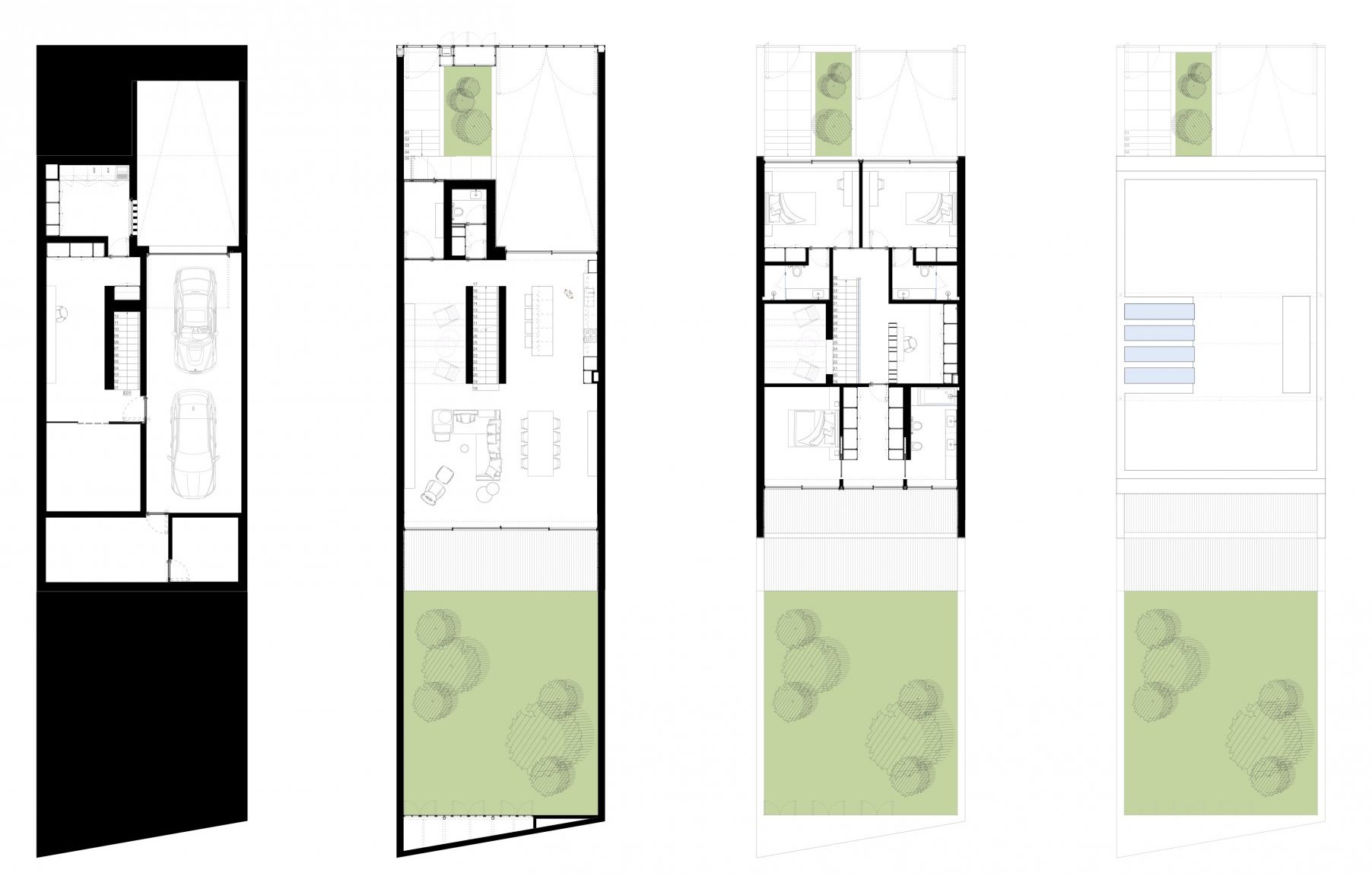
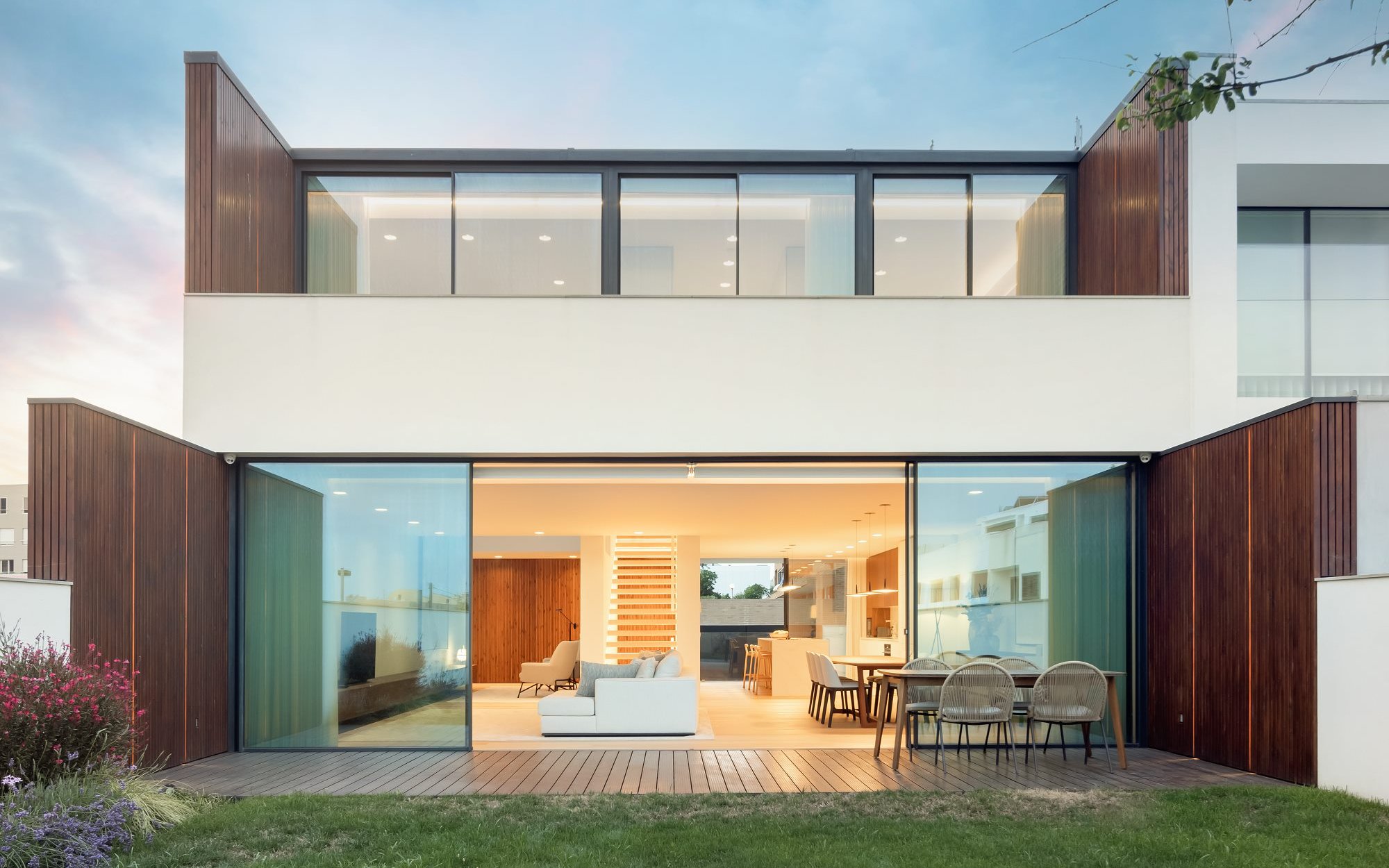
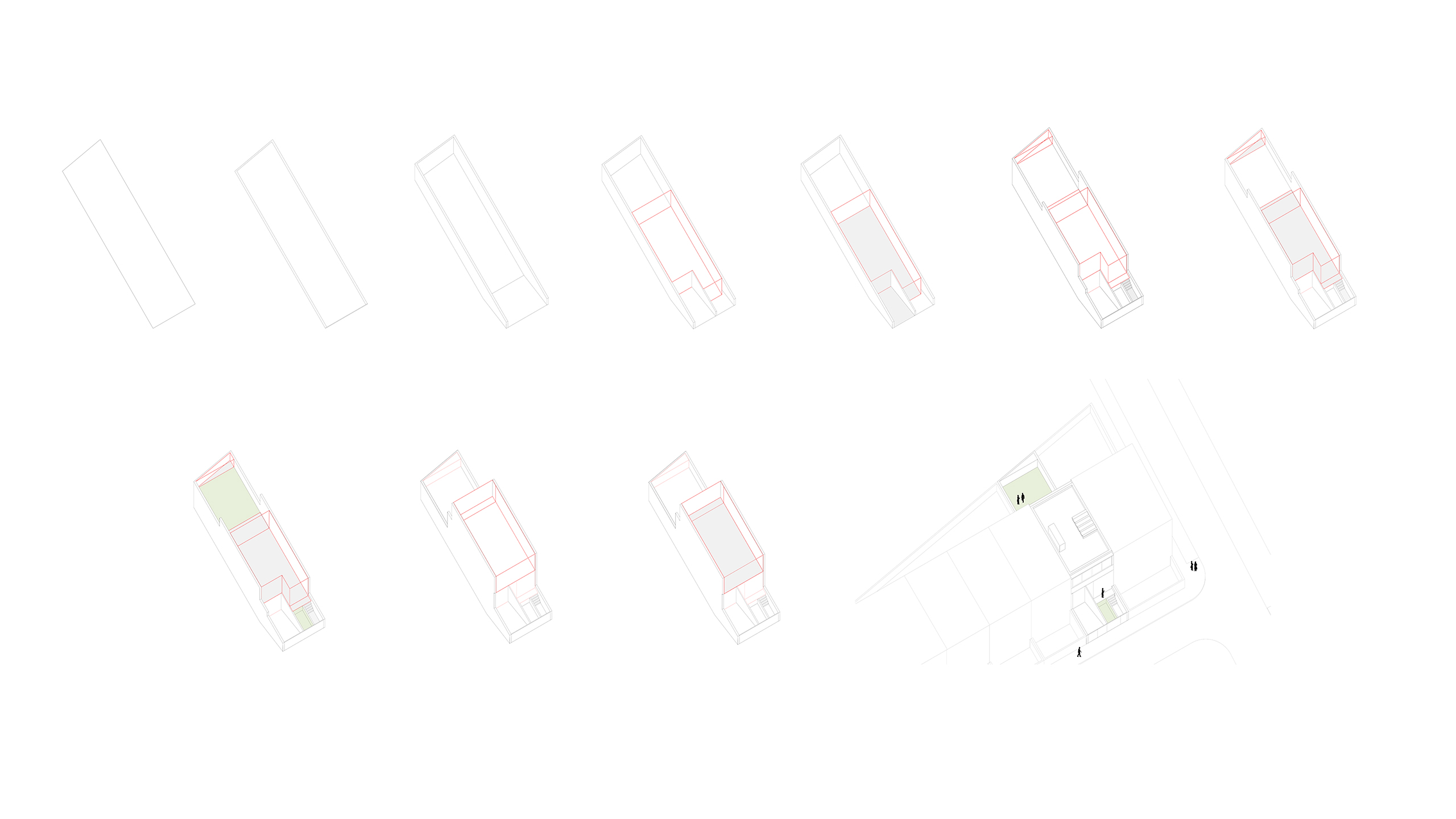
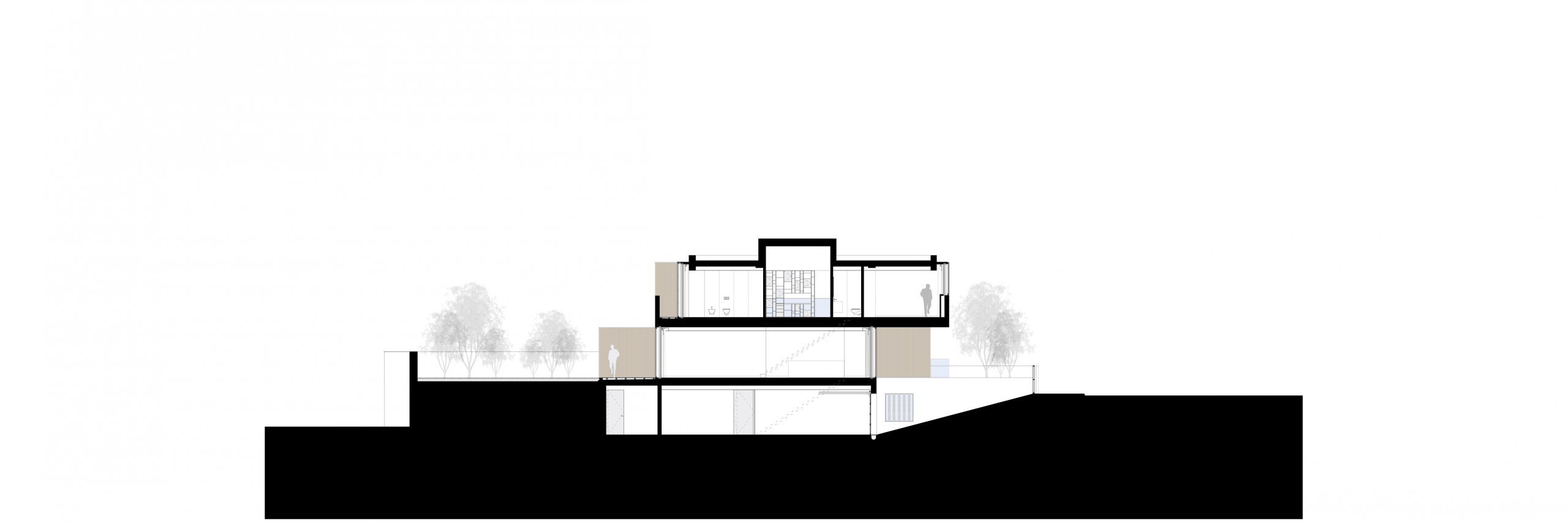
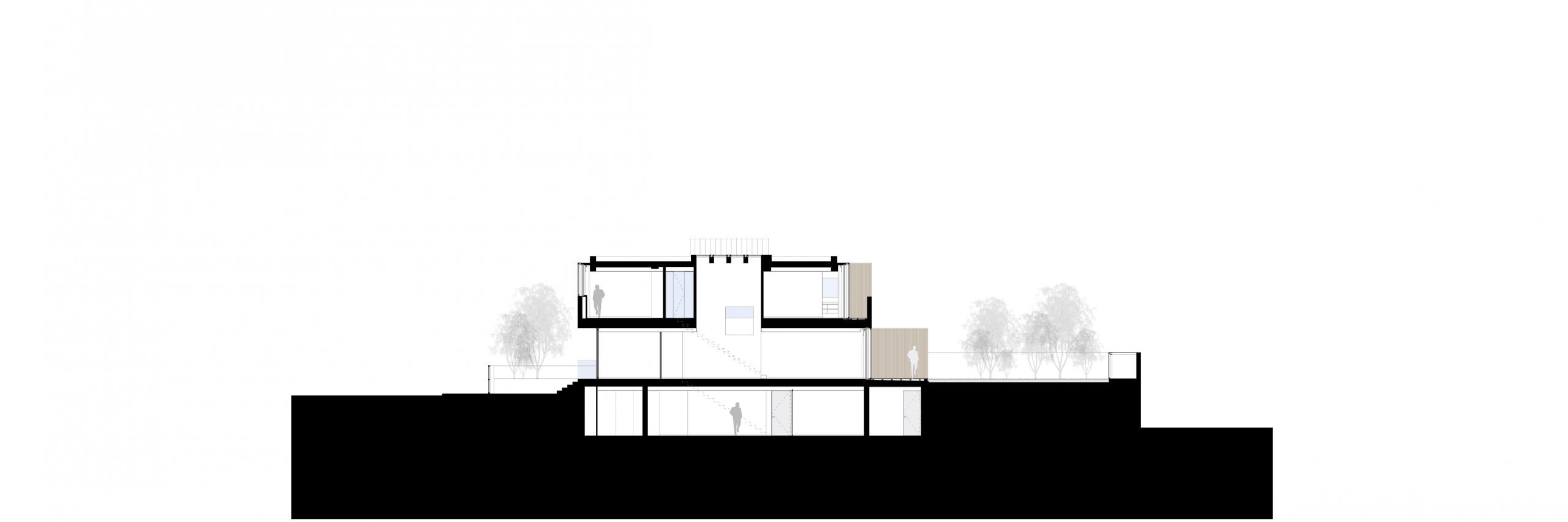
The house is organised over three levels: basement, ground floor and first floor. The slightly elevated ground floor, a requirement of the development, is reinterpreted as an opportunity, enhancing privacy from the street and facilitating access to the basement. This elevation detaches the building from the ground and lends it a clearer presence within the built fabric.
Its volumetry engages with existing alignments and levels, while also composing a dynamic interplay of solids and voids. Strategic setbacks and projections define a rhythm of exposure and concealment, precisely balancing light and privacy.
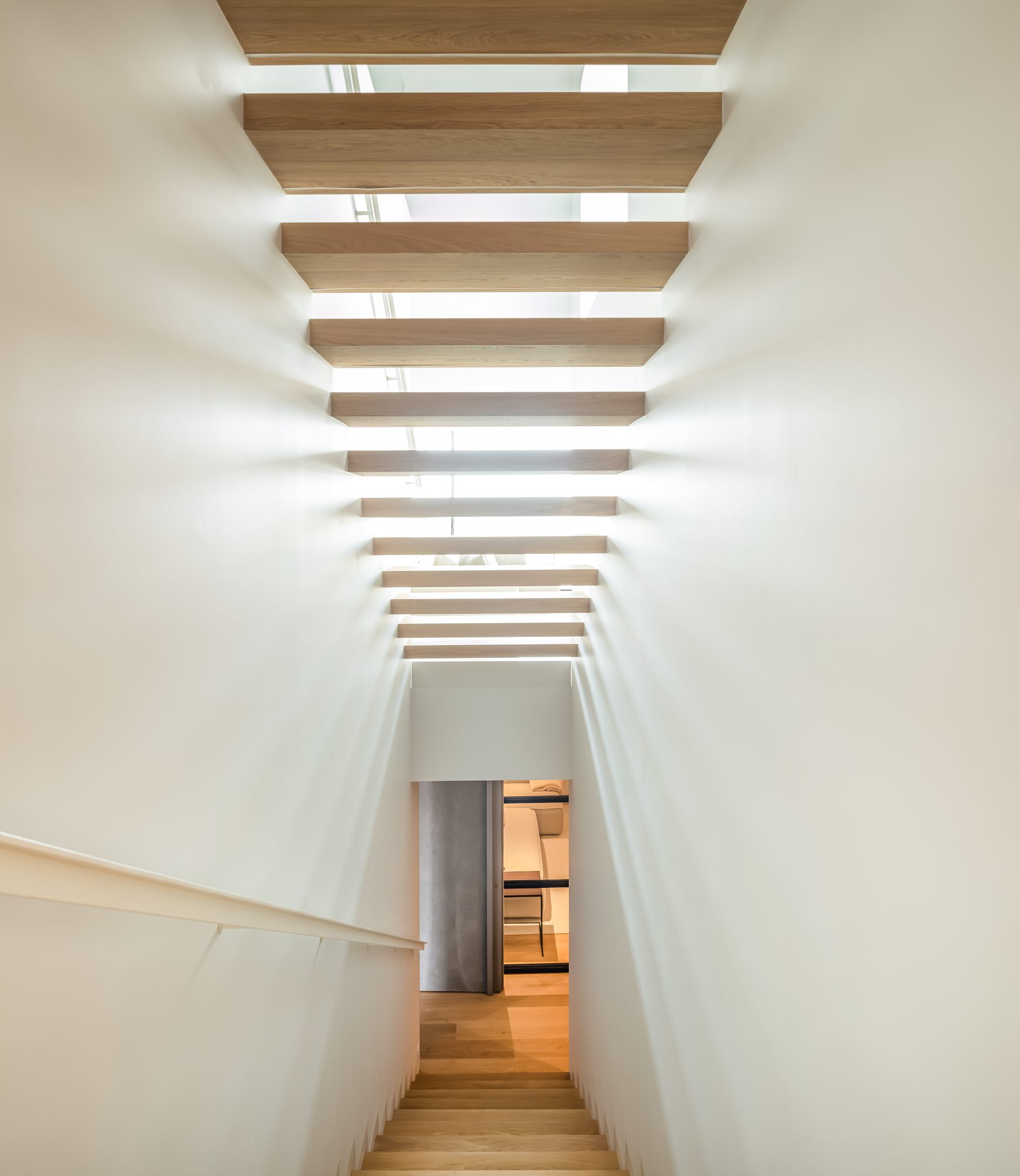
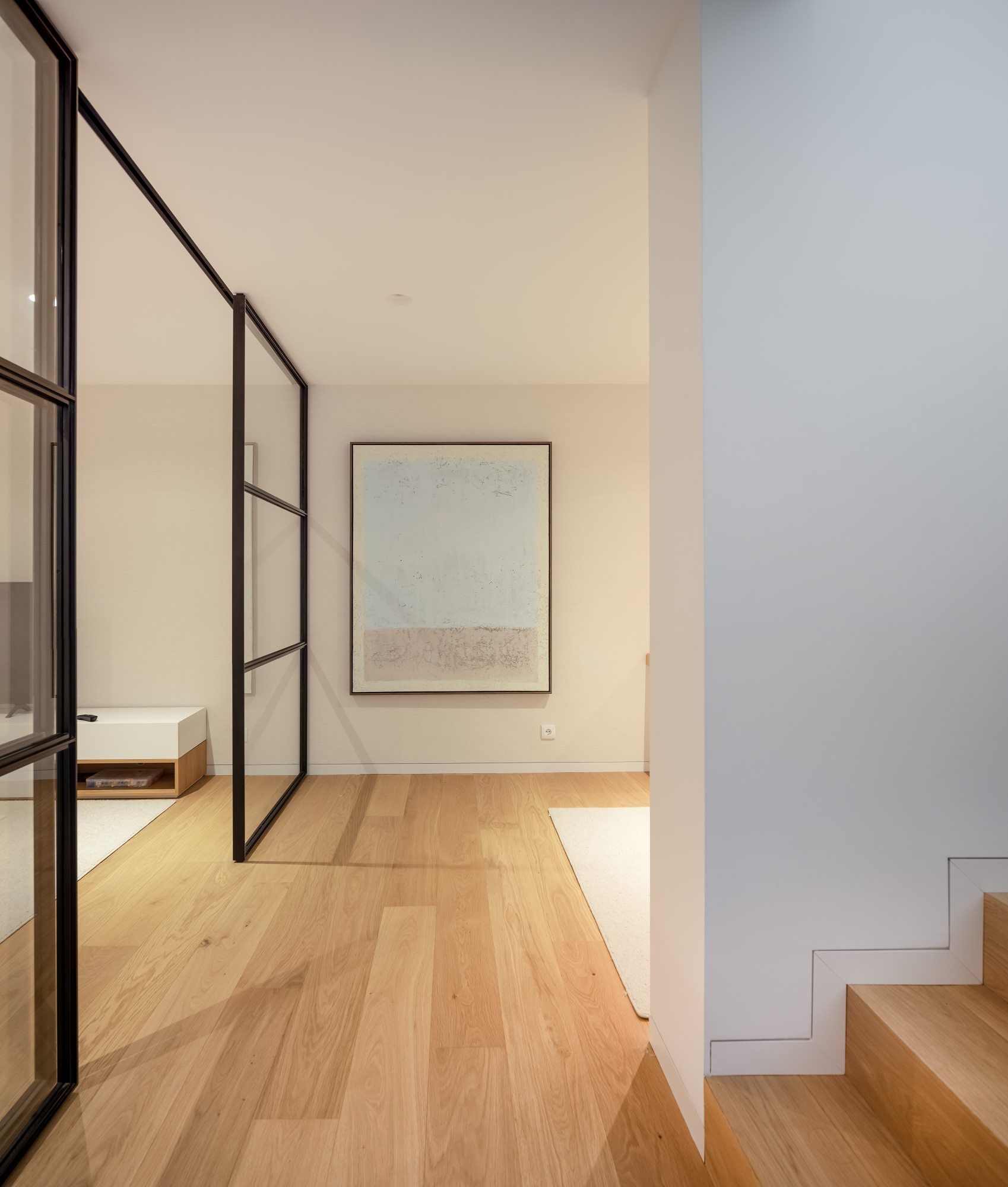
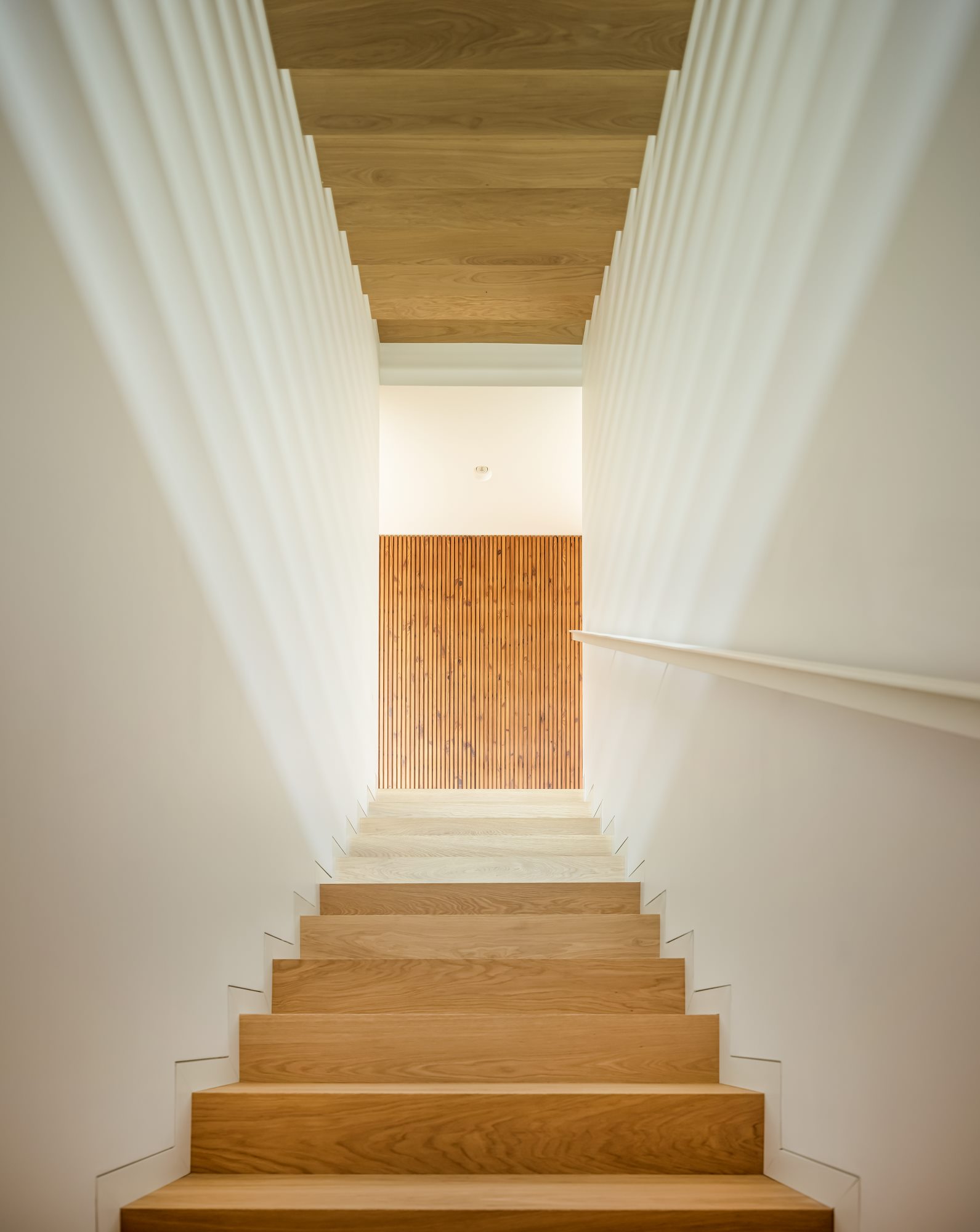
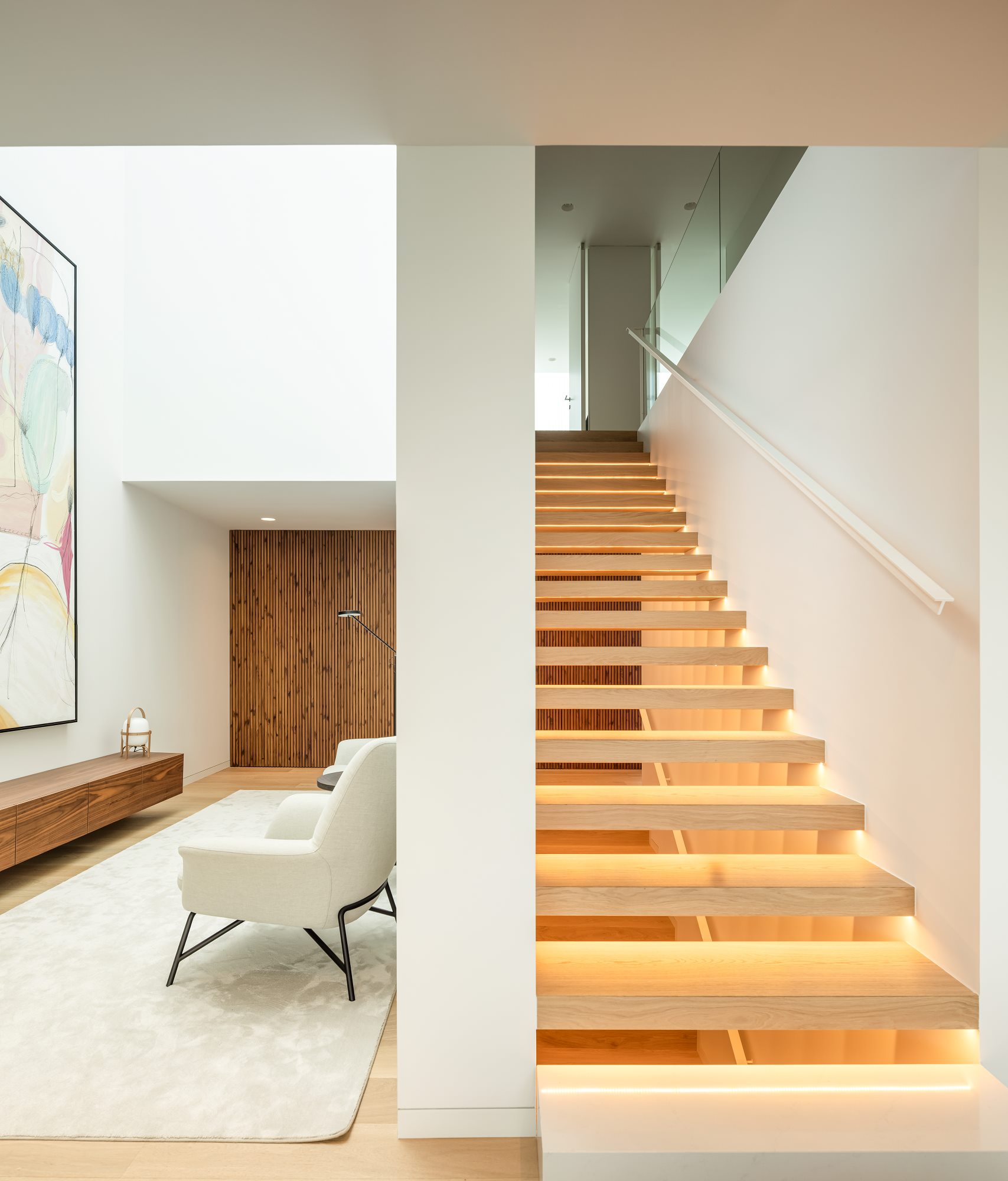
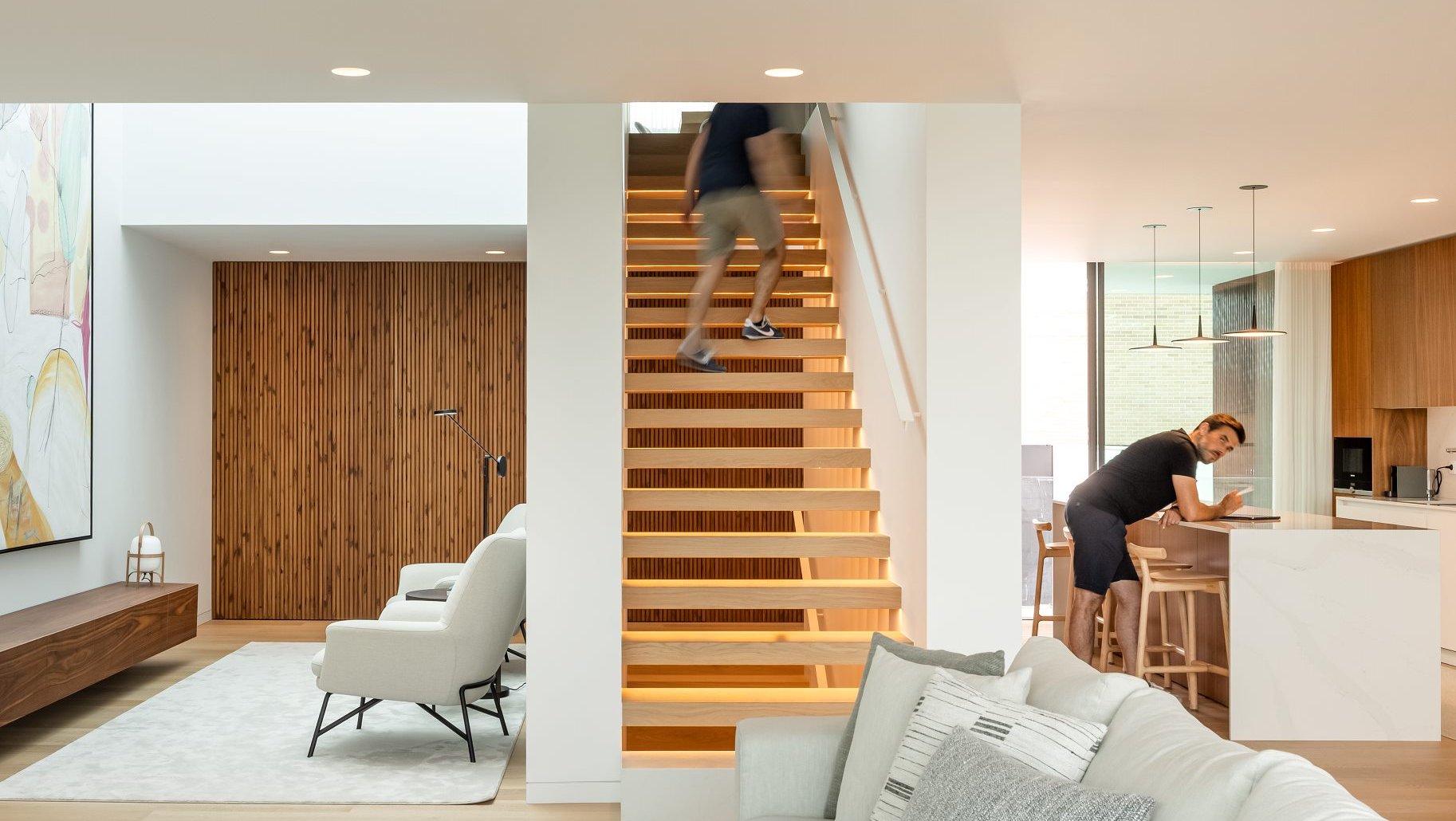
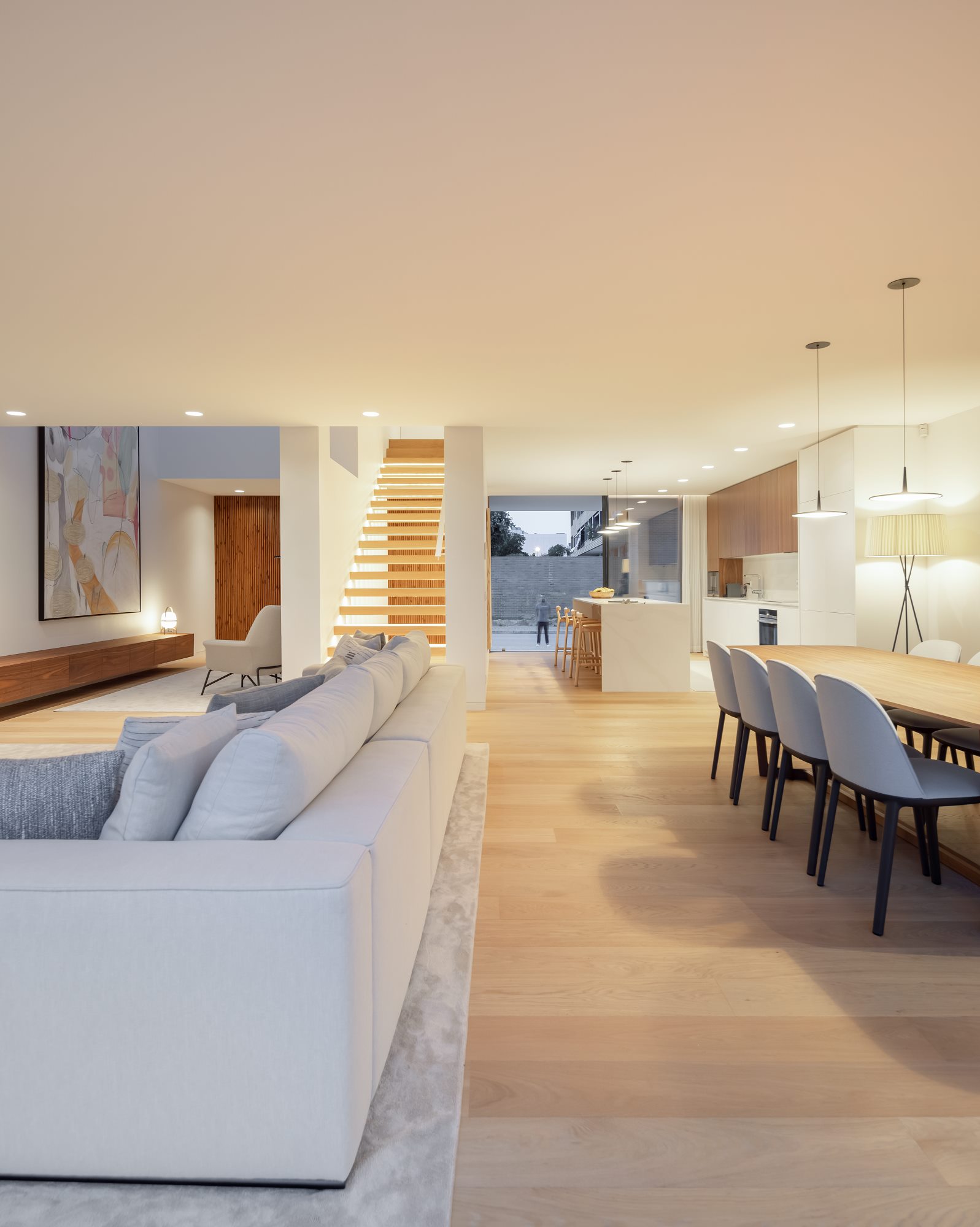
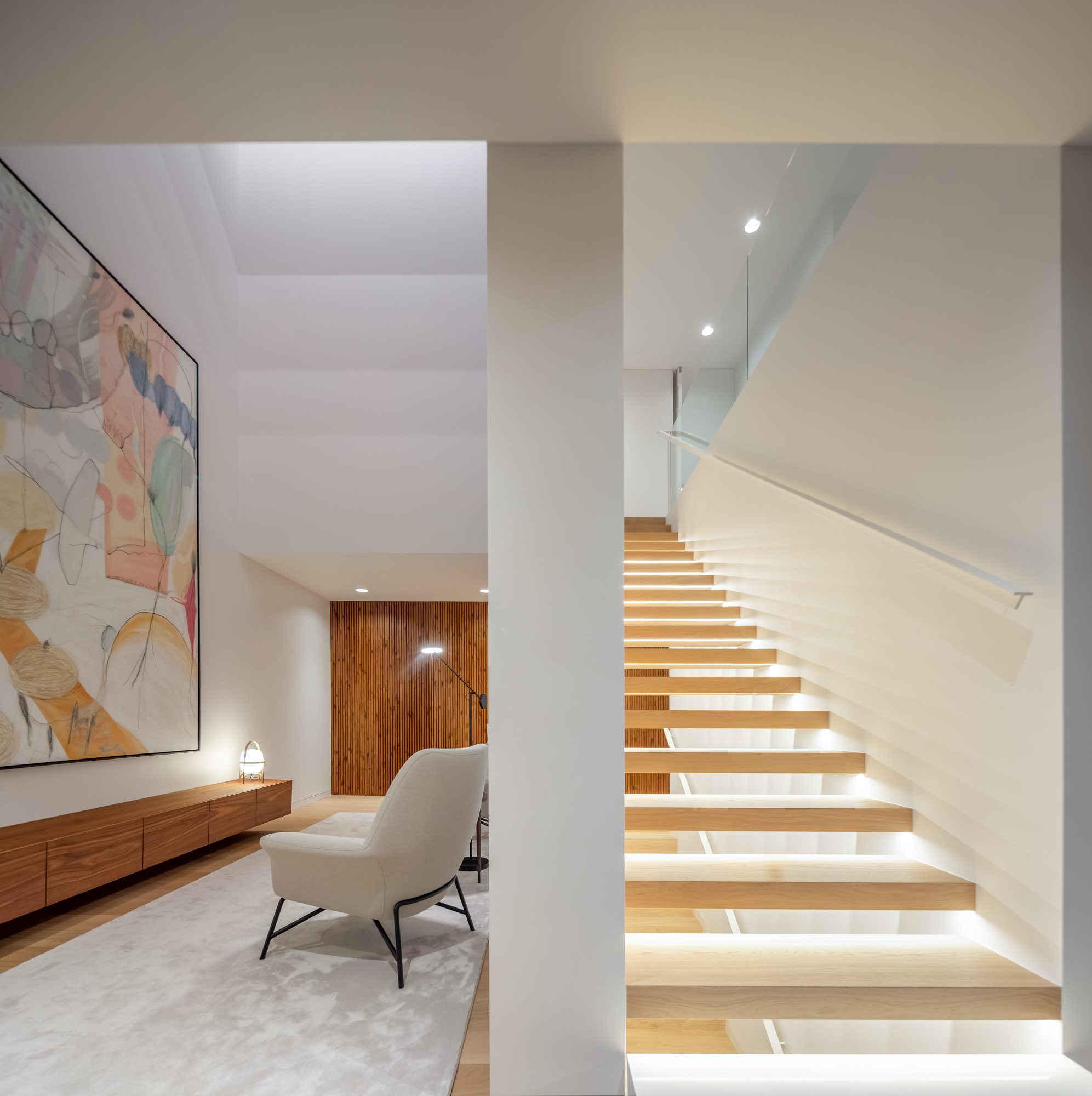
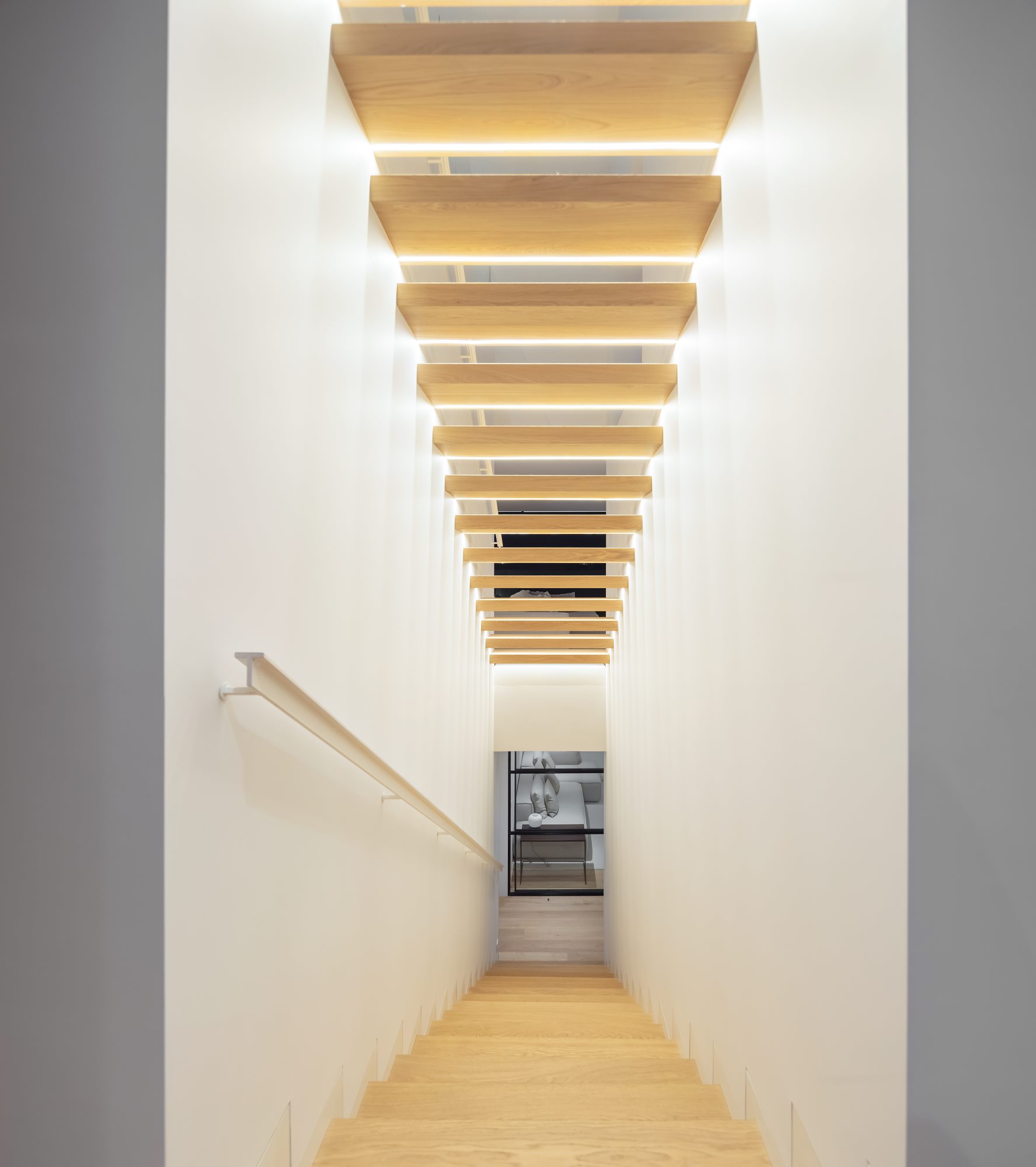
Internally, the house is structured around a central element: the staircase. It serves as the spine of the home, linking the three levels while orchestrating spatial hierarchies and circulation. In the basement, it becomes a wall that separates the garage from the social and leisure areas, establishing functional independence without rupture. This lower level accommodates more introspective moments yet remains connected to the house’s vertical logic.
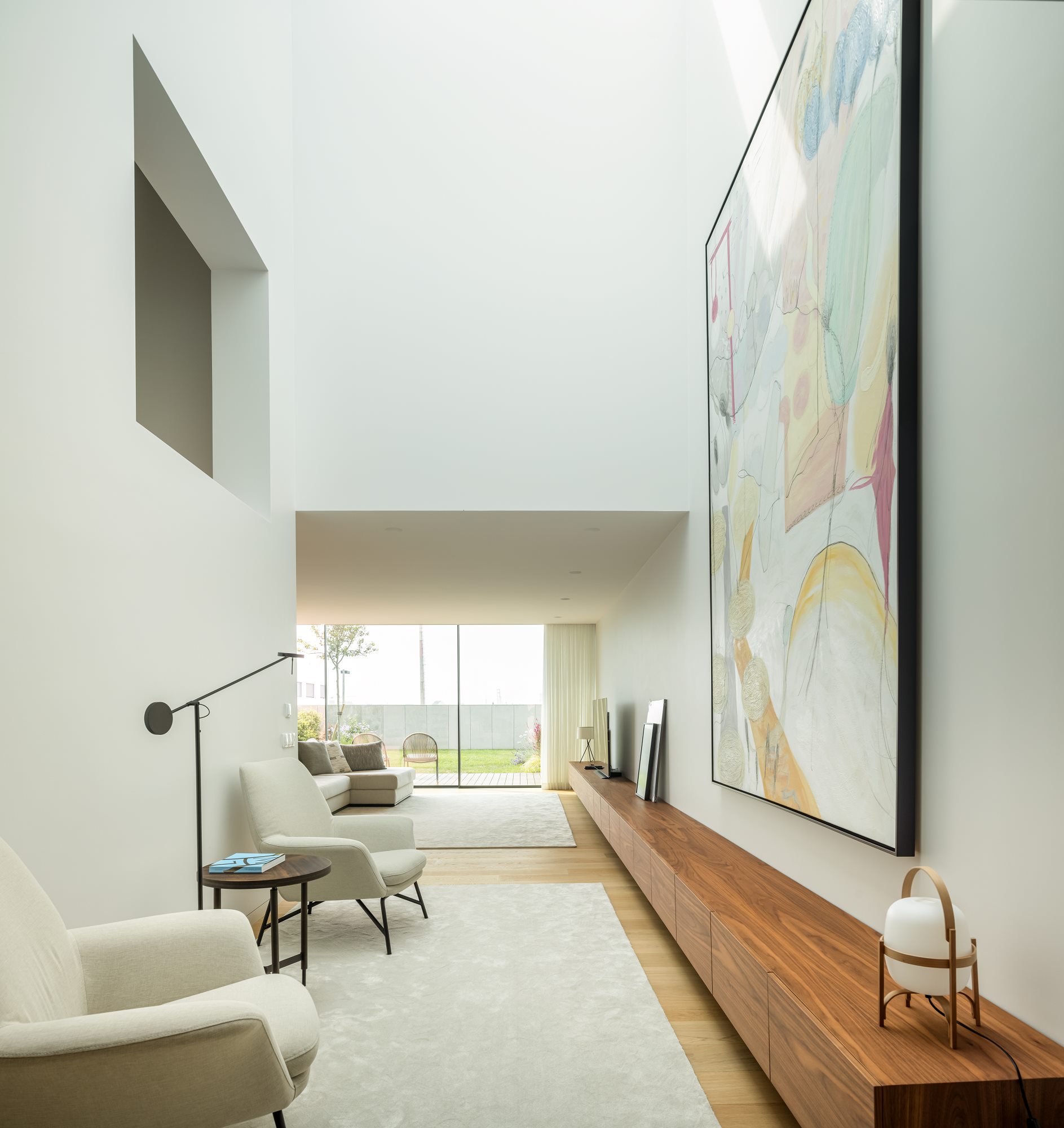
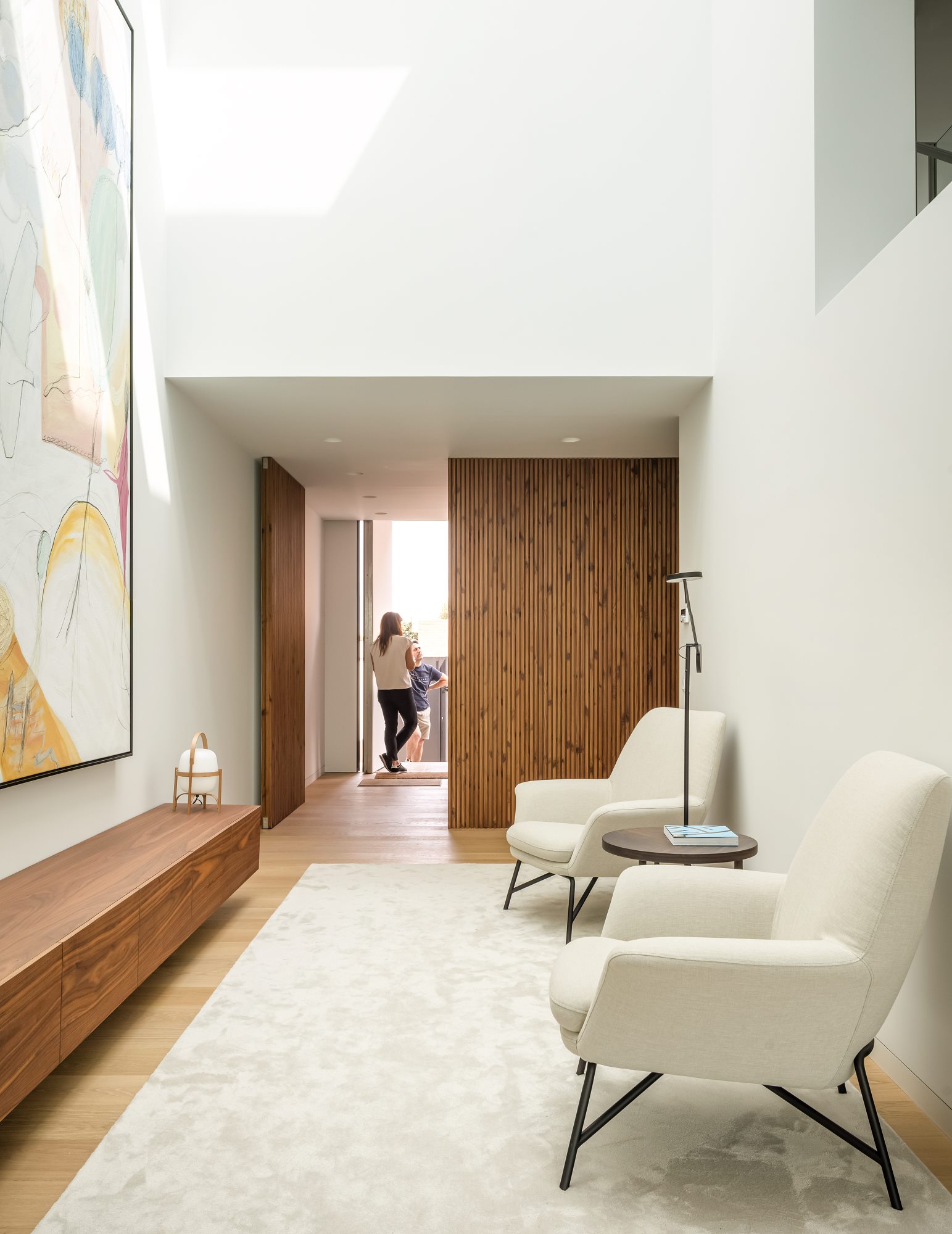
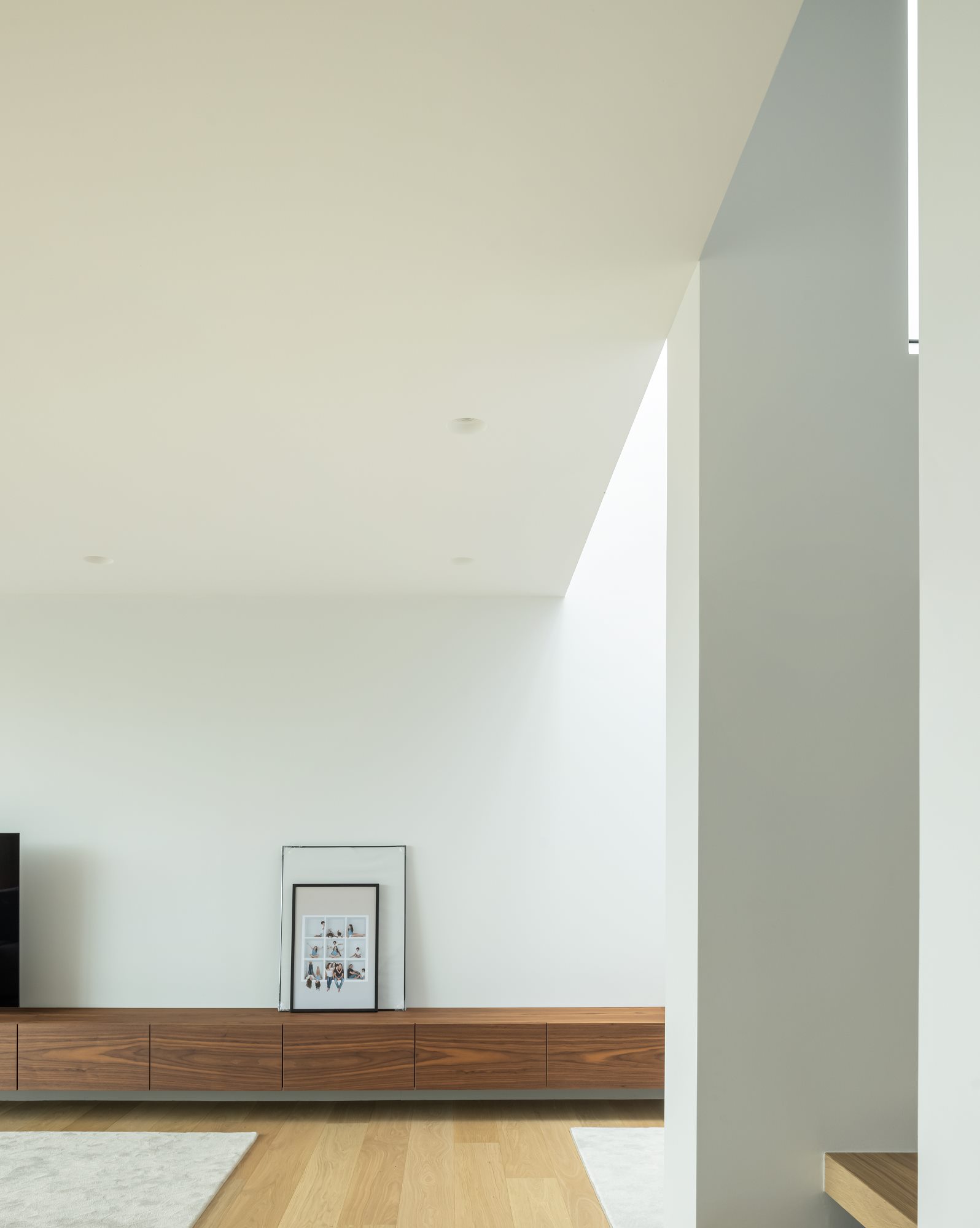
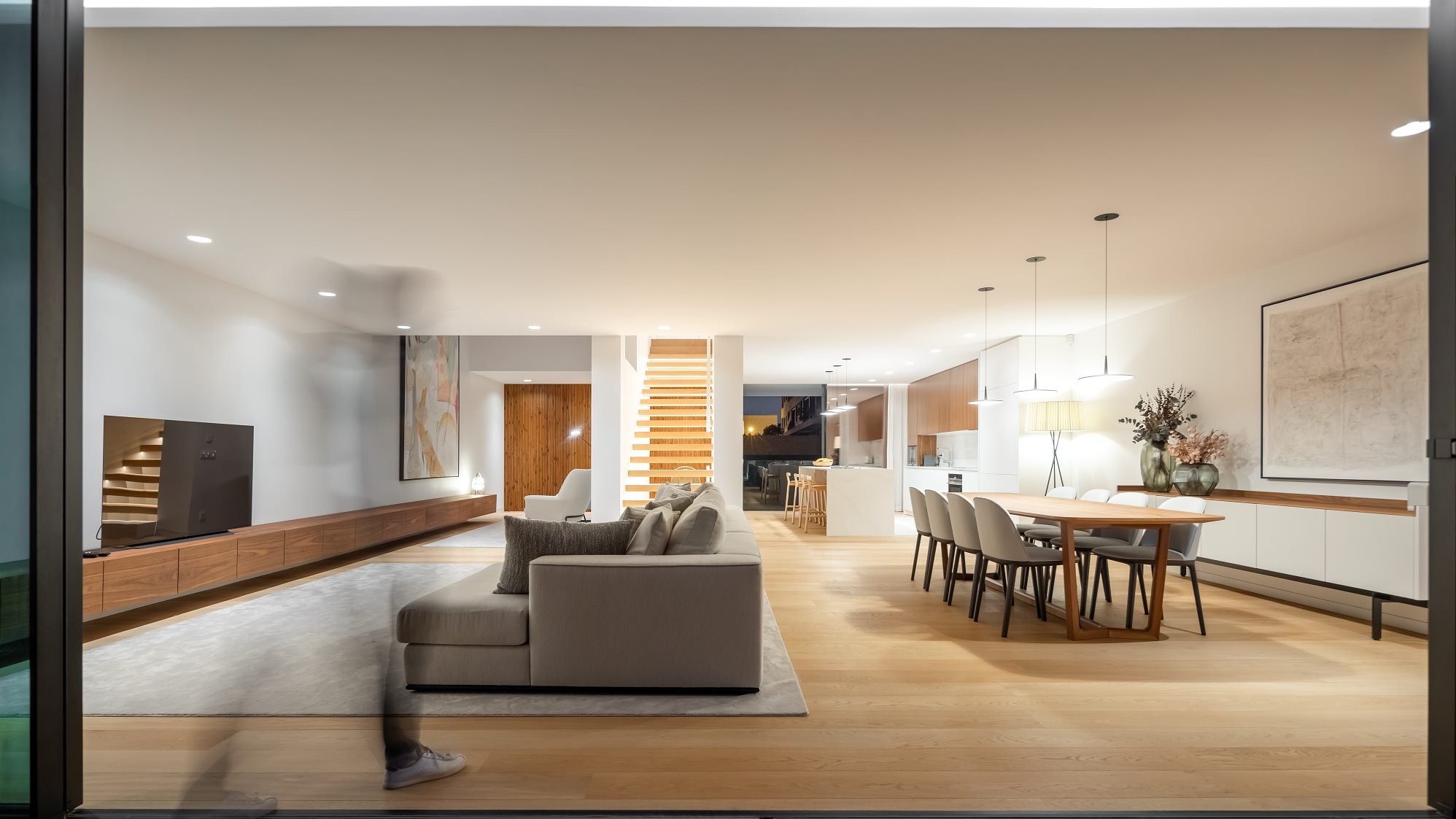
On the ground floor, the entrance leads to an inhabitable atrium marked by a double-height ceiling. A continuous skylight runs above, pouring light with a nearly tactile density. This vertical axis of light shapes the experience of arrival and resonates throughout the entire floor, anchoring the home’s spatial coherence.
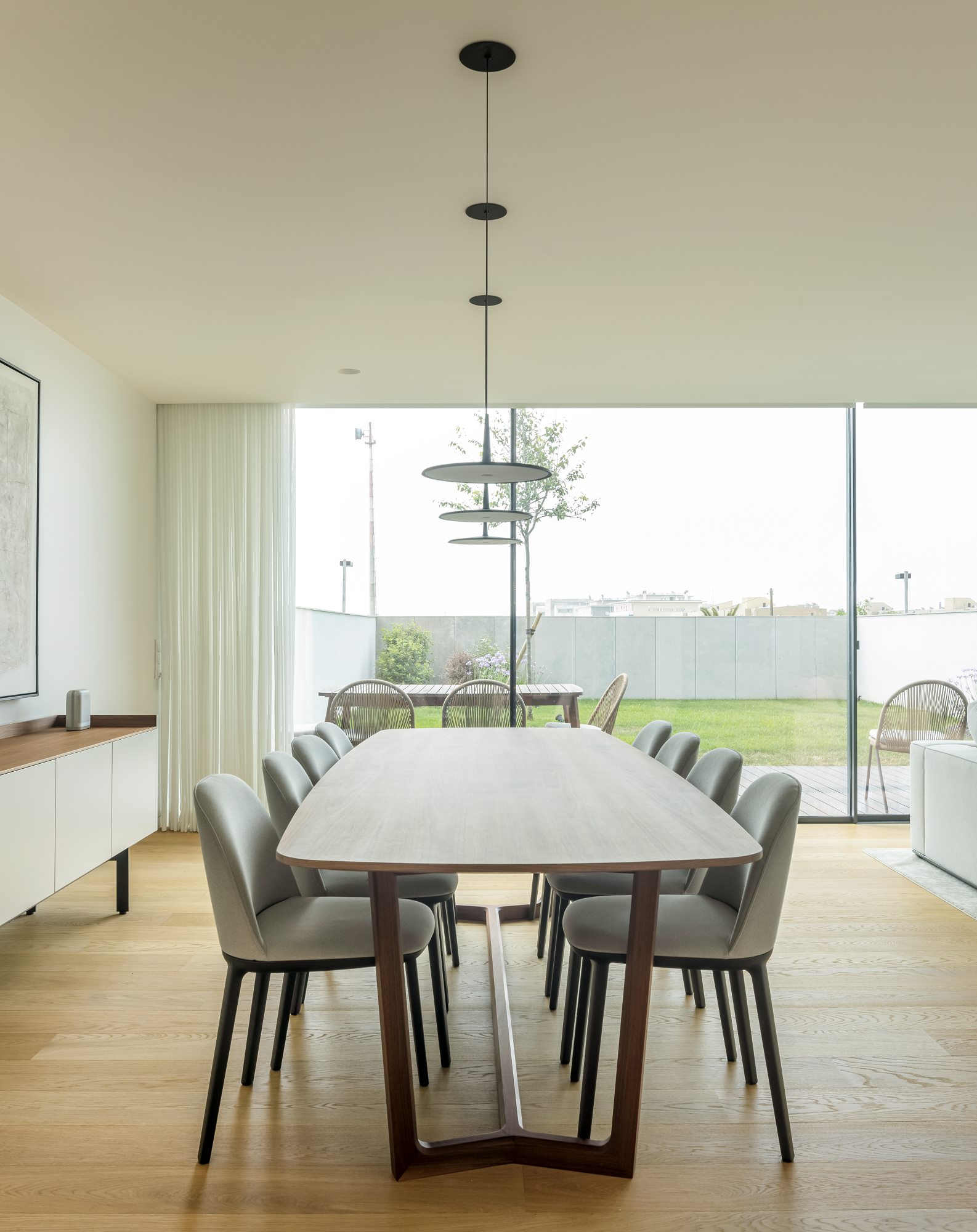
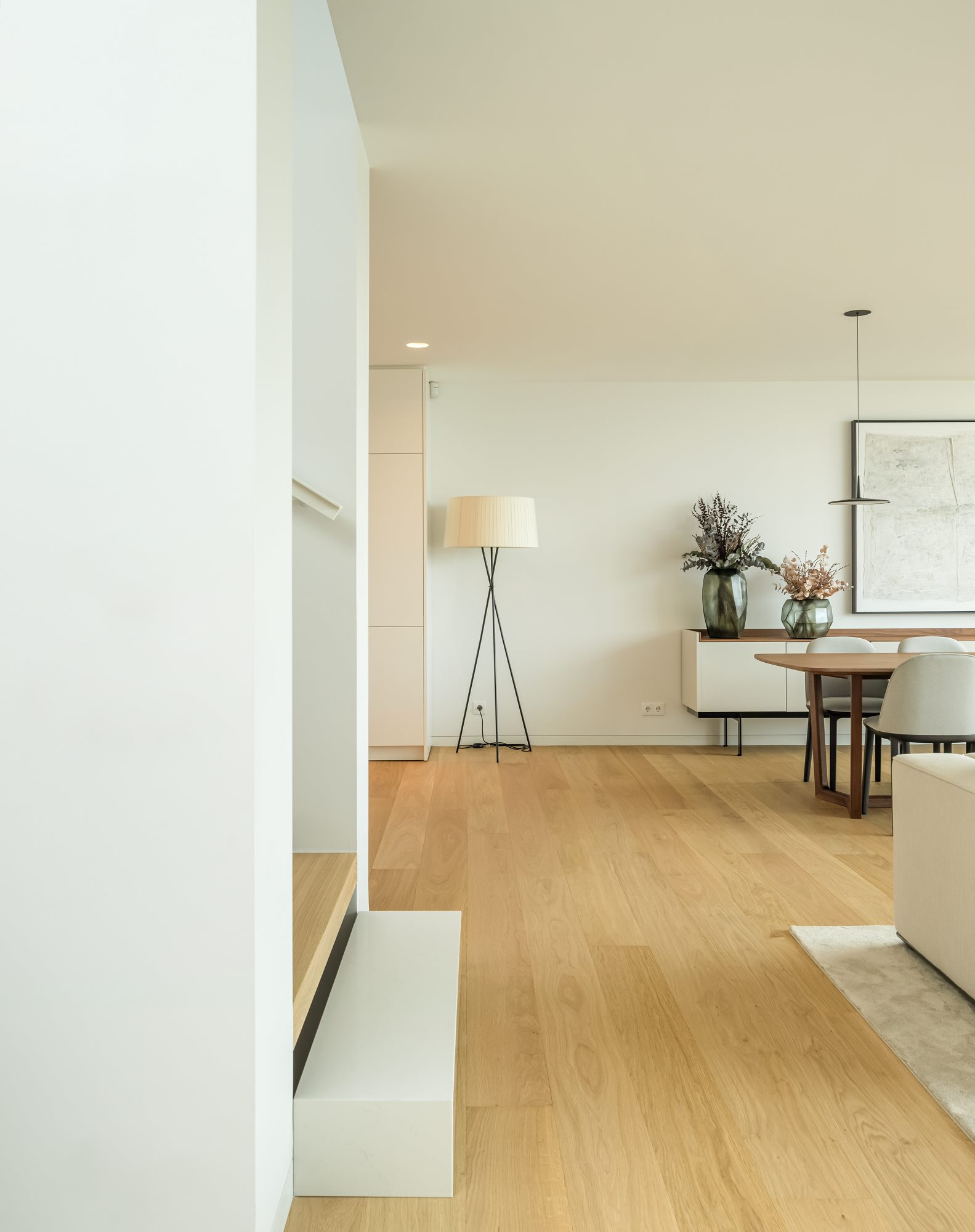
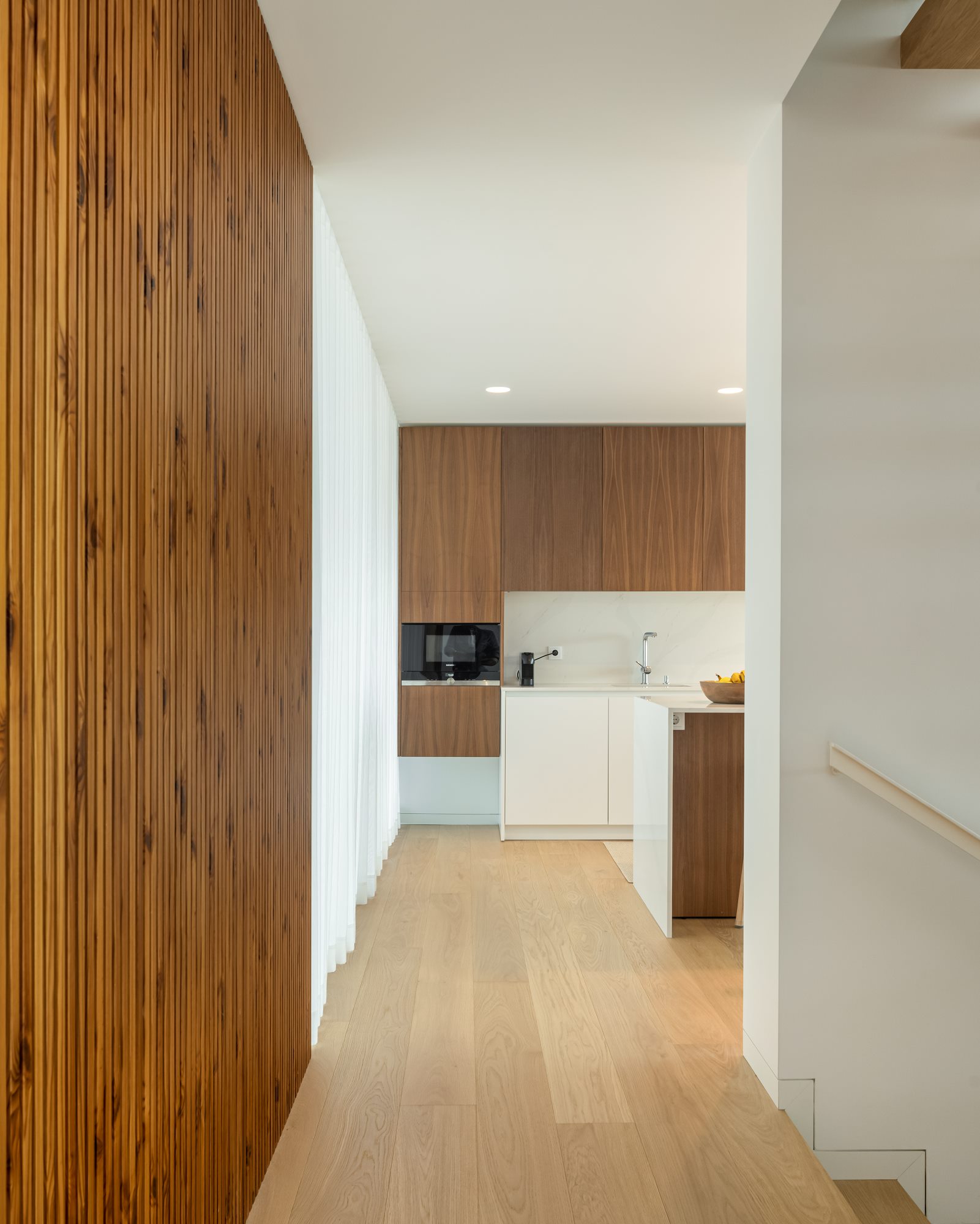
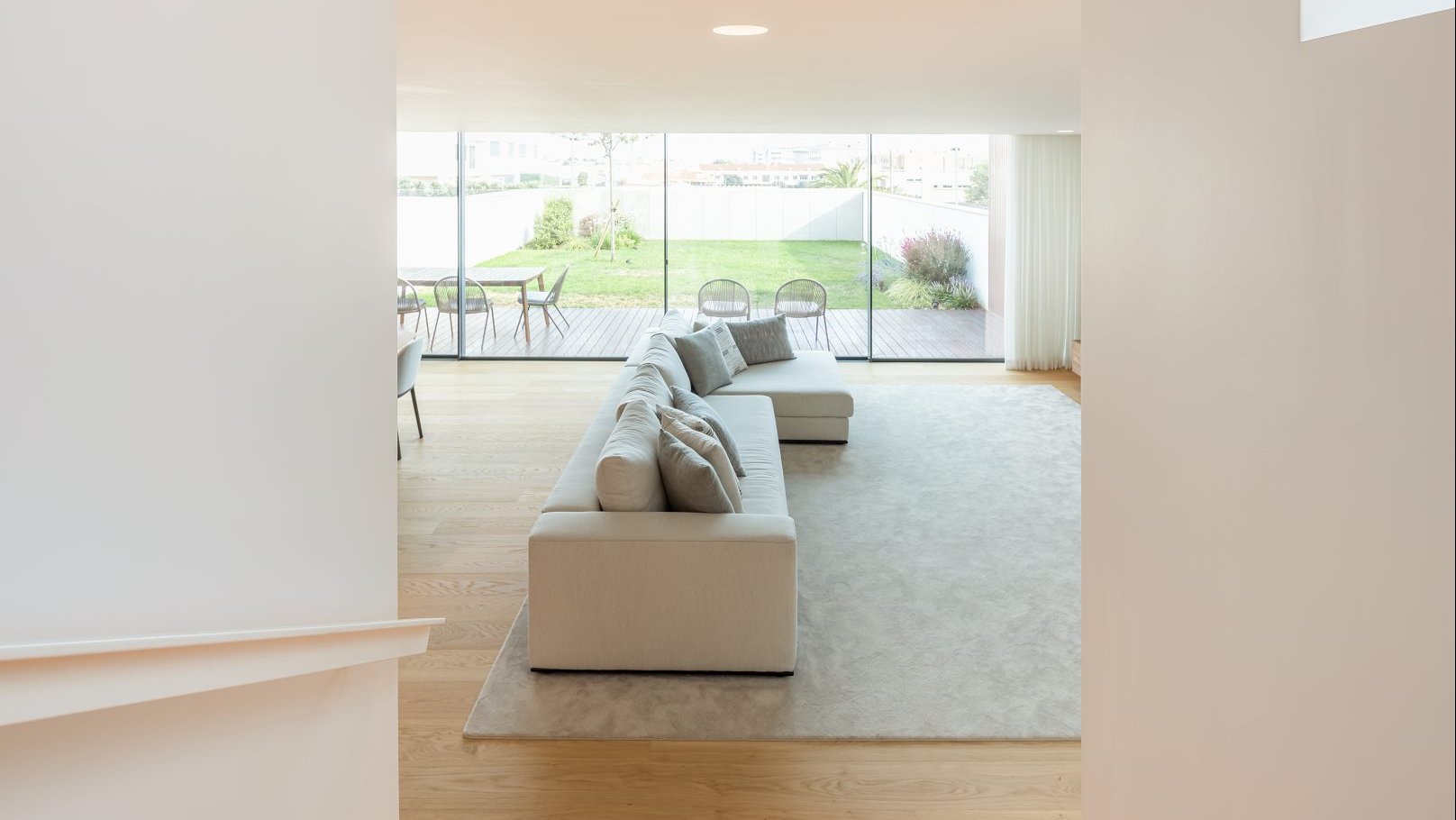
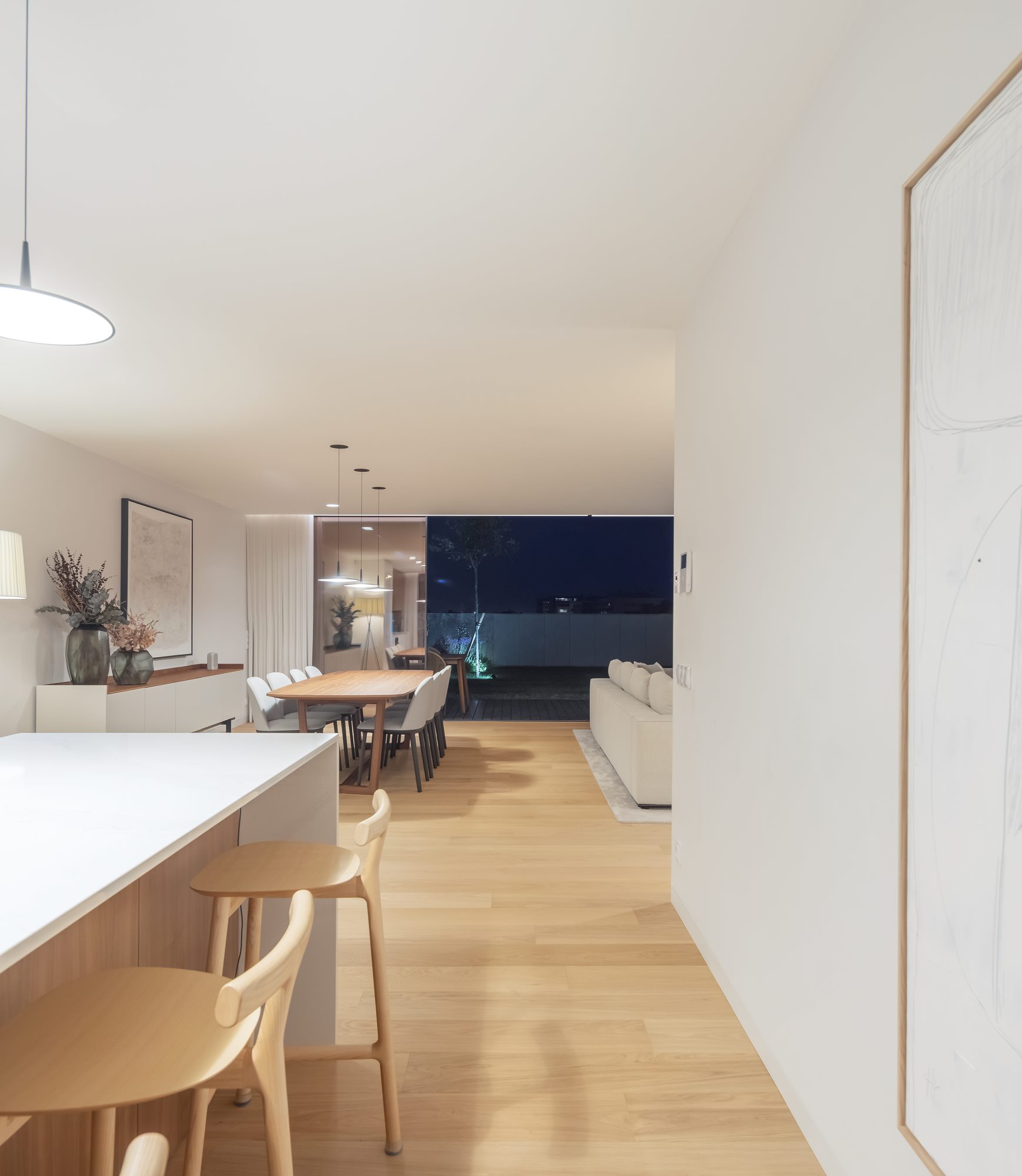
From this central space, the programme unfolds into three interrelated quadrants: kitchen, living and dining area and the atrium itself. A secondary, horizontal axis of light links the kitchen to the dining area and opens the house to the rear garden, creating visual continuity between inside and outside. These light paths reinforce the spatial fluidity and dissolve built boundaries.
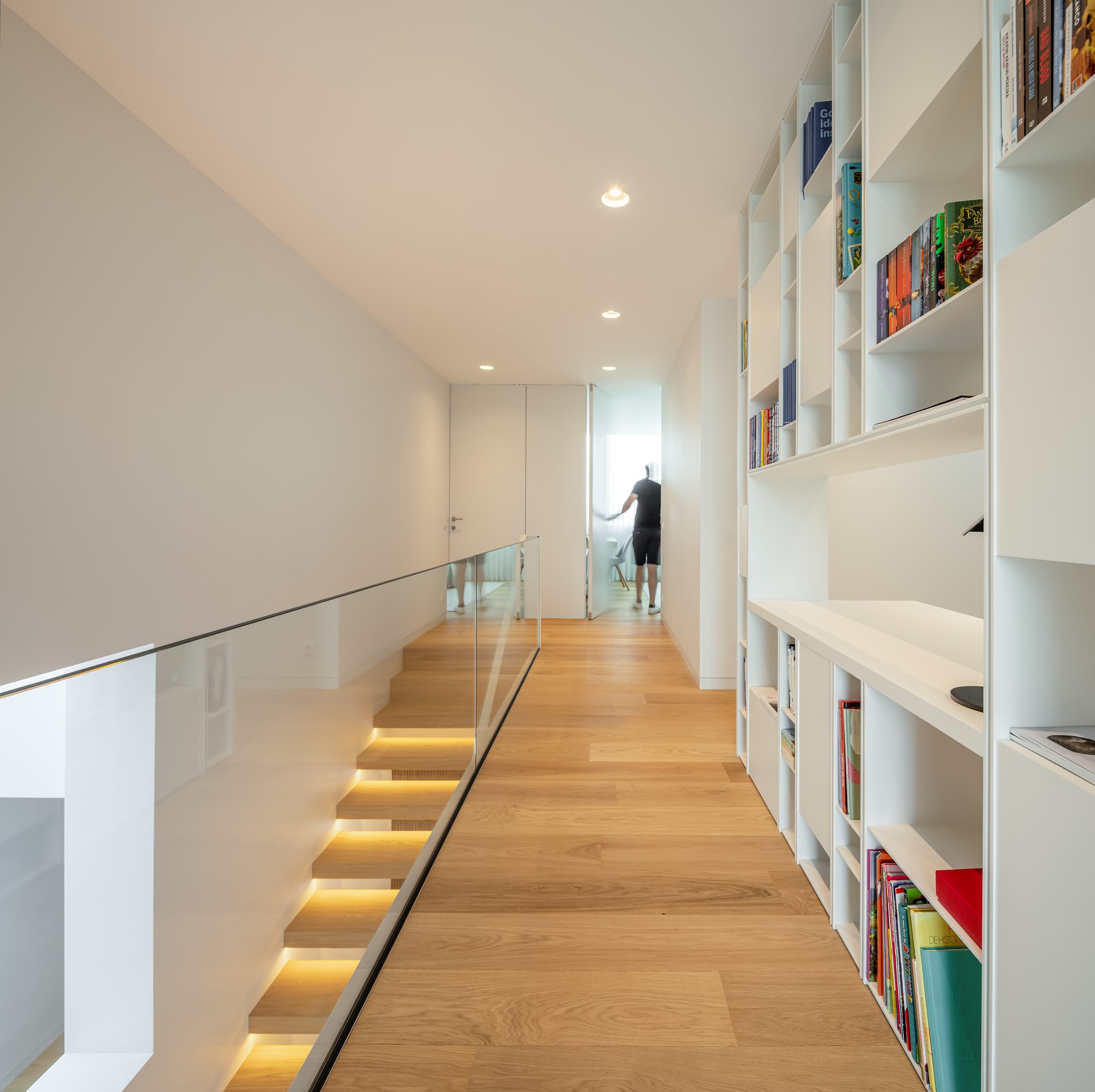
At the heart of this configuration, the staircase takes on a sculptural and porous form, organising flows without interruption. Discreet yet decisive, it supports the idea of a continuous house defined more by light than by walls.
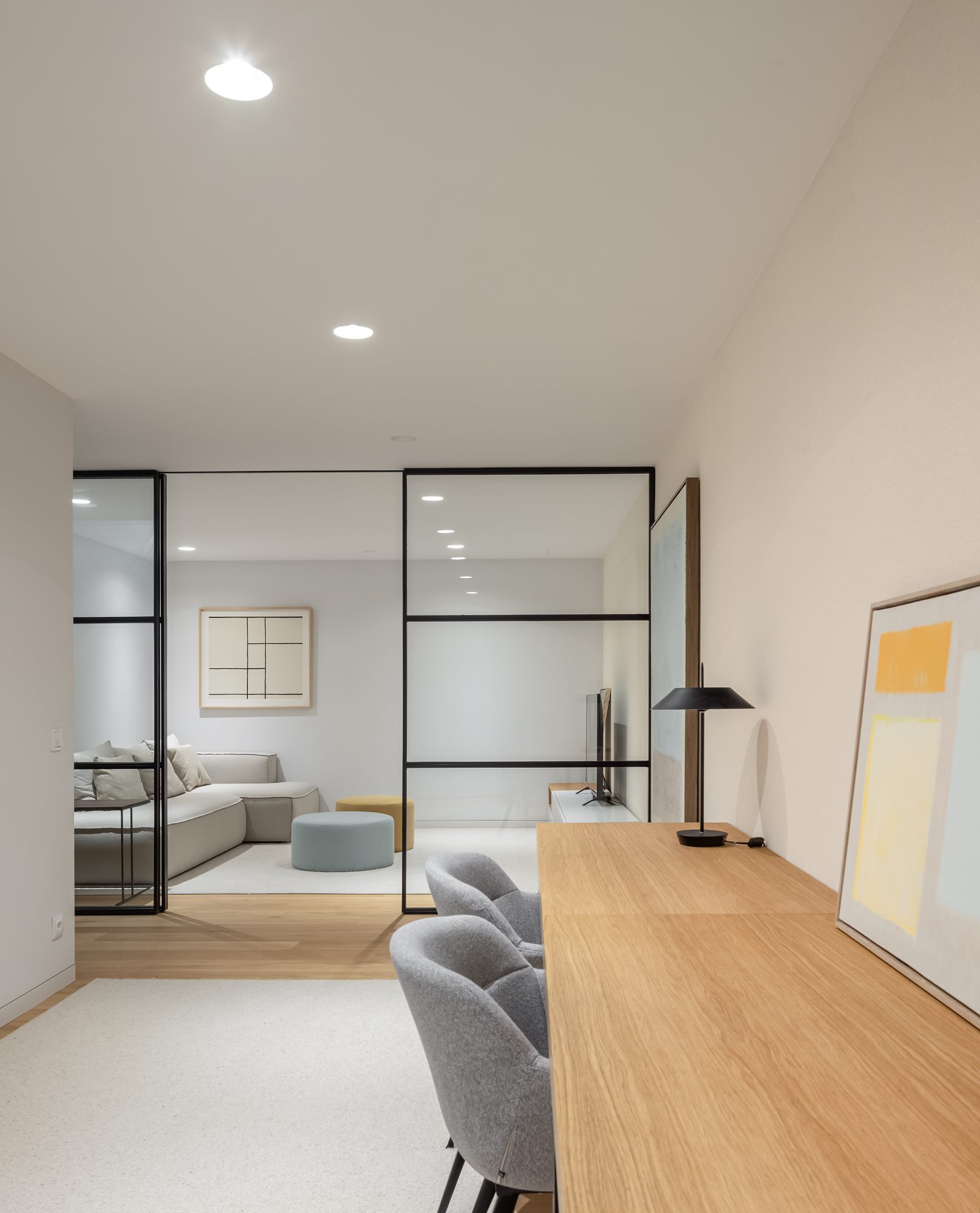
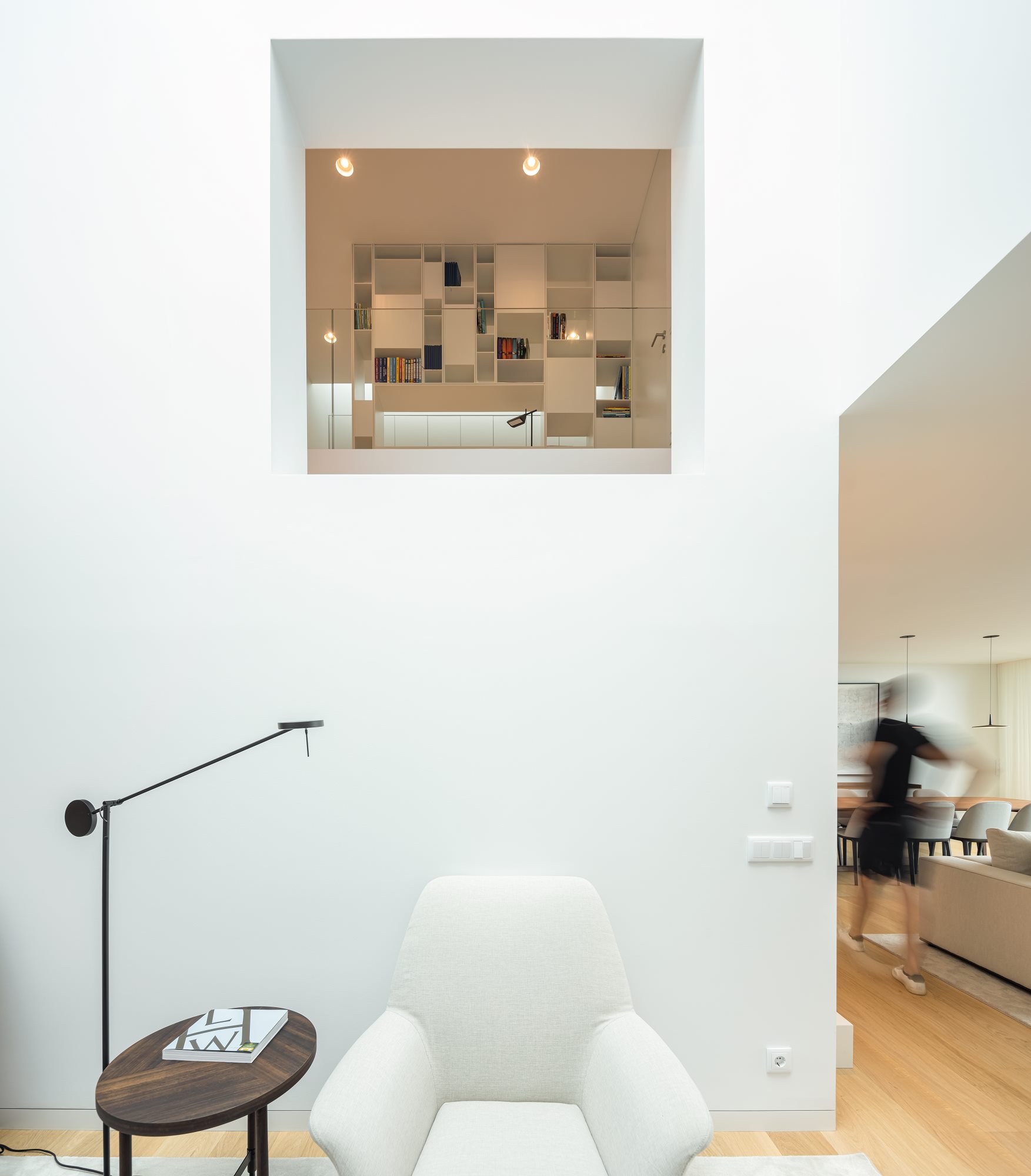
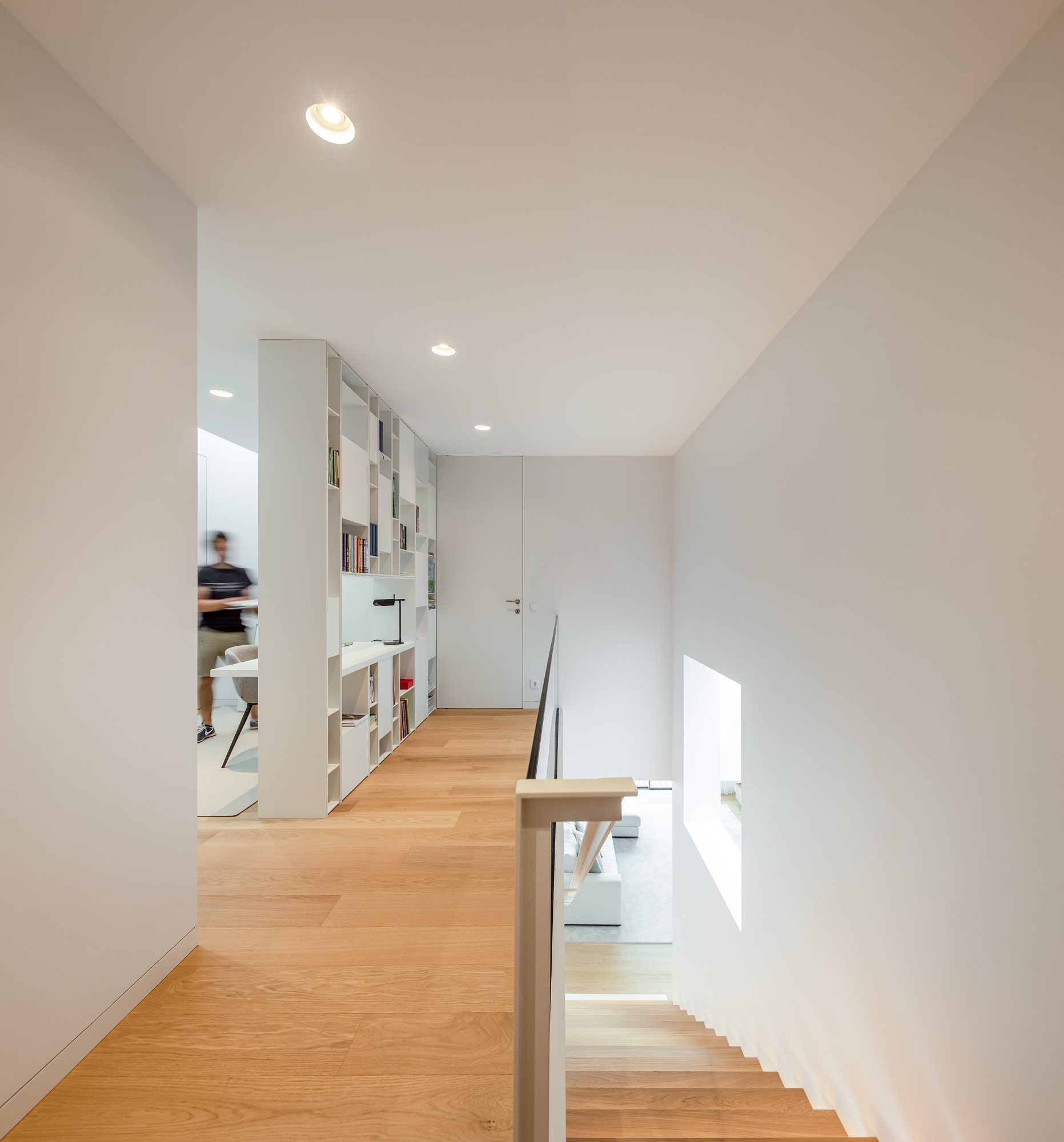
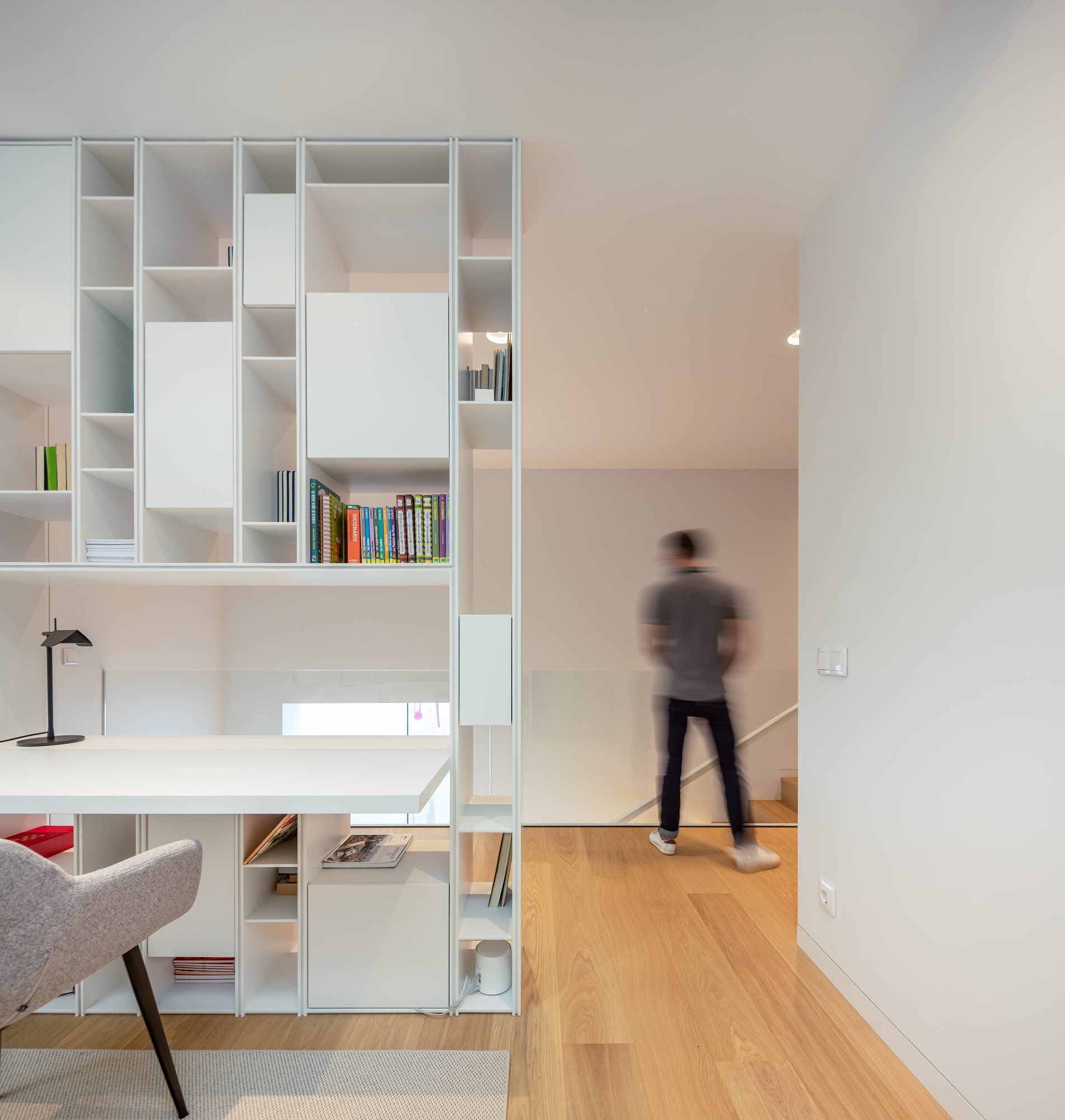
The upper floor concludes the ascent with a transitional space that serves as arrival, circulation and informal workspace. A transparent bookshelf outlines the office, preserving visual continuity with the atrium below. This gesture extends the vertical relationship of light, maintaining visual and atmospheric cohesion across levels.
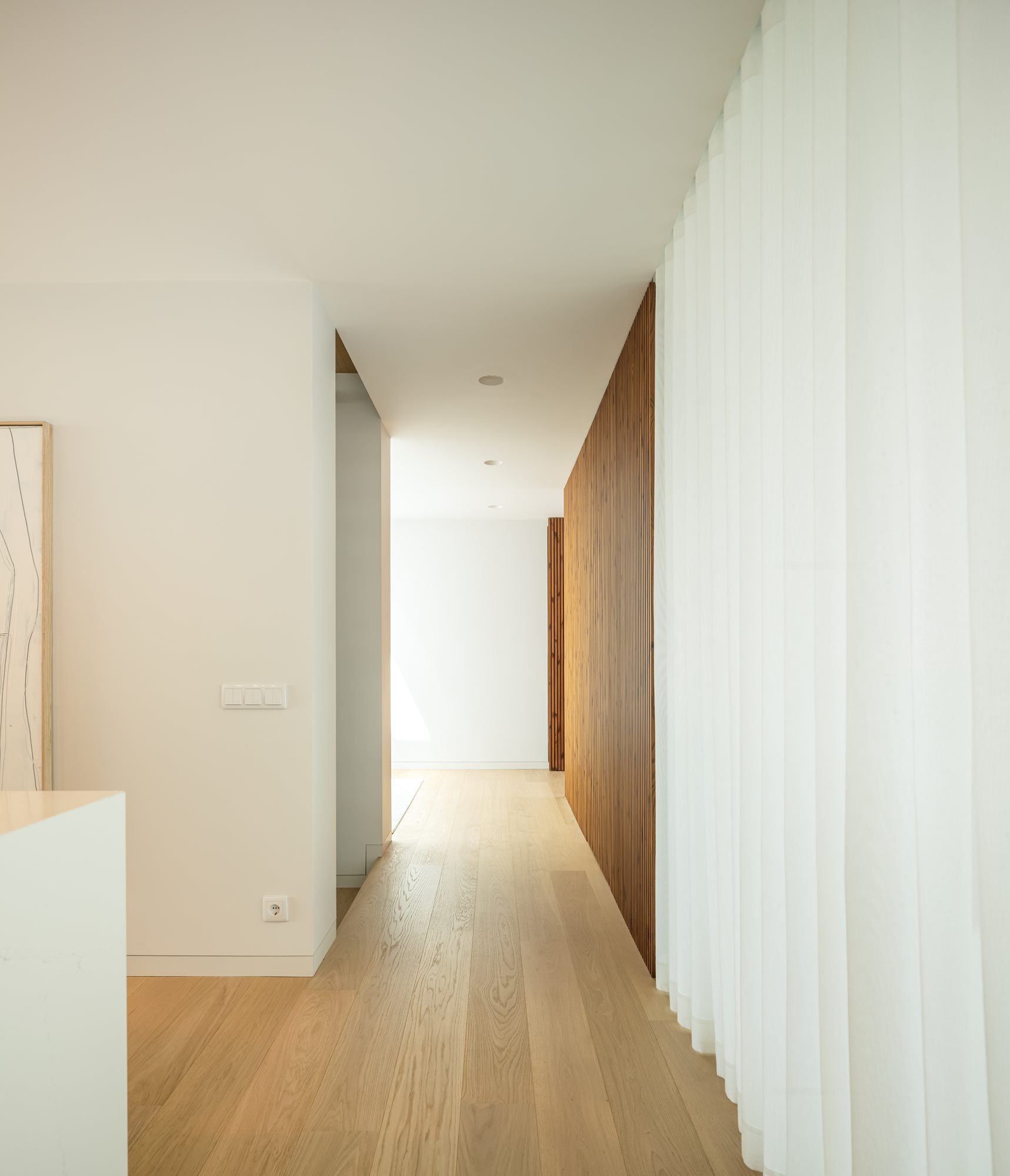
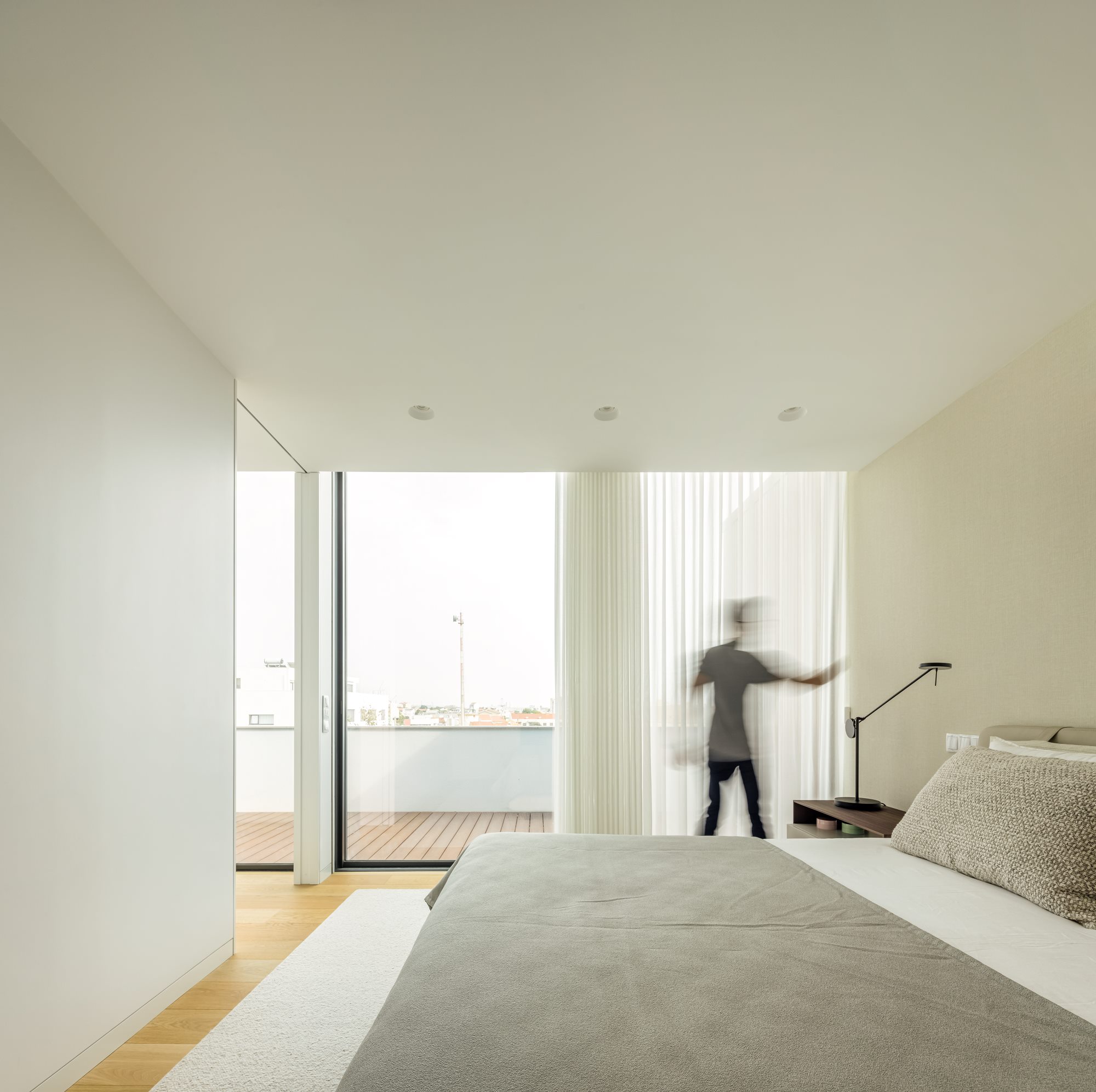
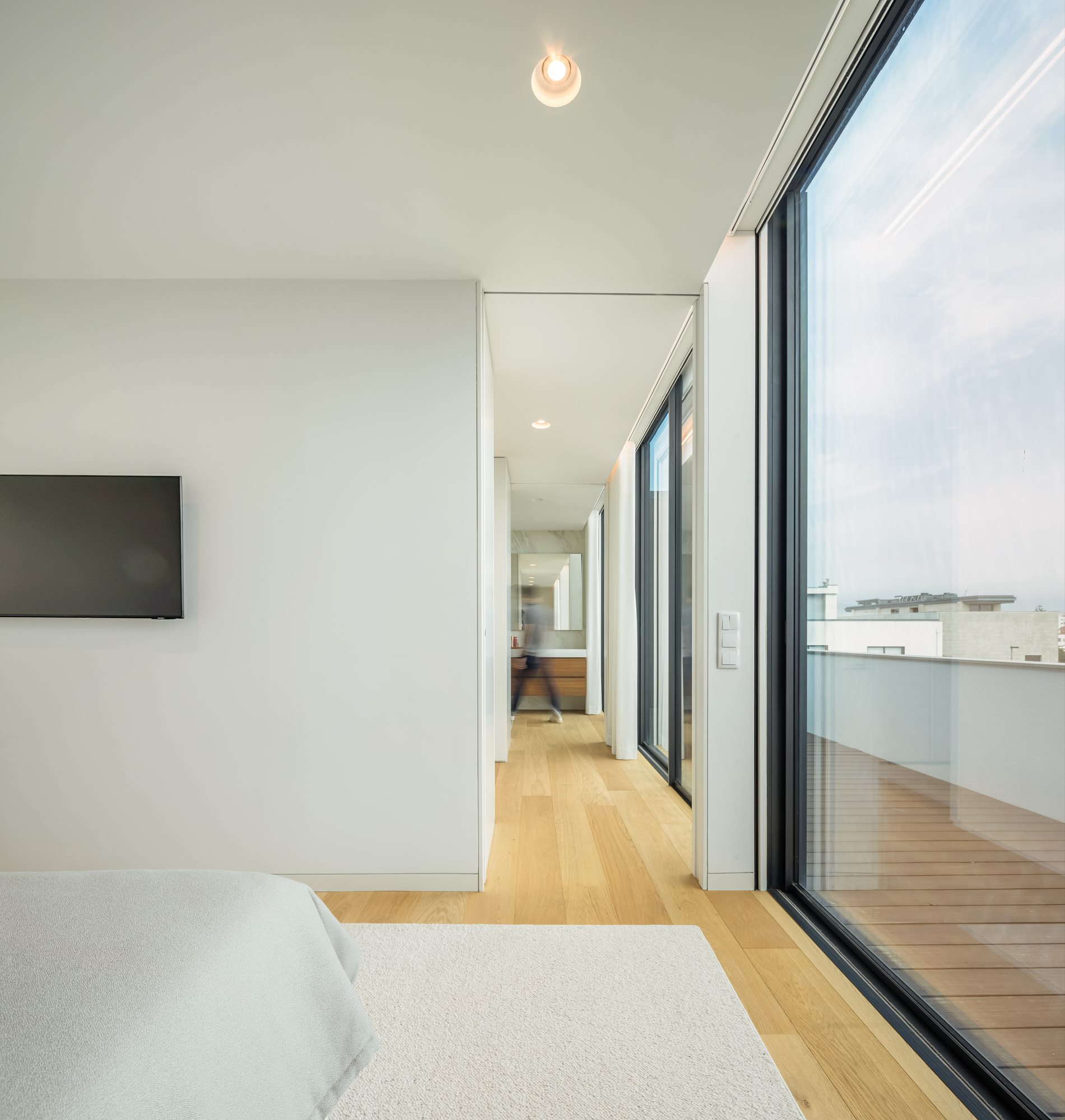
A precisely placed roof lantern introduces a raw, constant light into the workspace, lending it a subtle, domestic solemnity. From this point, access to the three bedrooms unfolds naturally, with no enclosed corridors or forced articulations. Privacy is respected, yet the spatial continuity that defines the house is never compromised.
Casa CL2 is, above all, an exercise in restraint and precision. Every constructional decision is made in response to a specific way of living. Quiet, unpretentious and essential, this is architecture that listens not to fashion but to the rhythms of life.


- Project Year: 2017
- Area: 406m2
- Site: Leça da Palmeira | Matosinhos
- Code: 17CL2
- Coordinators:
- Henrique Marques | Architect
- Rui Dinis | Architect
- Collaborators:
- Tiago Maciel | Architect
- Adriana Pacheco | Architect
- Fred Delgado | Architect
- Joana Leitão | Architect
- João Ortigão | Architect
- Marco Santos | Architect
- Financial Director:
- Carla Duarte | CFO
- Photography: FG+SG
- Furniture Design: Bairro Design